
Animation has come a long way since its inception, with various techniques evolving over time. One of the most significant milestones in animation history is cel animation, a method that revolutionized the way animated films were created. Though digital techniques dominate the modern landscape, cel animation continues to hold a special place in the hearts of animators and audiences alike. In this blog, we will explore what cel animation is, its history, techniques, examples, and how it shaped the animation industry.
What is Cel Animation?
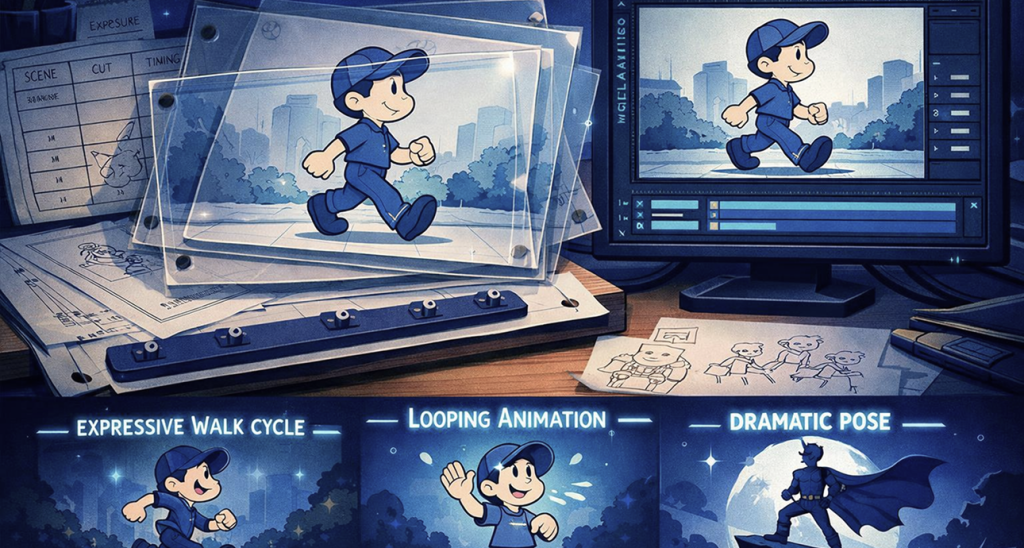
Cel animation is a traditional animation technique in which each frame of the animation is hand-drawn on a transparent sheet of celluloid, known as a “cel.” The process involves creating individual drawings, which are then inked and painted by hand. These cels are layered on top of a painted background and photographed frame by frame to create motion. This technique was a cornerstone of the animation industry, particularly in the Golden Age of Animation, which saw the rise of iconic animated films.
Key Features of Cel Animation:
- Hand-drawn Art: Each frame is meticulously drawn by hand.
- Transparent Sheets: The use of clear cels allows for easy layering of characters and backgrounds.
- Frame-by-Frame Photography: Every change in the scene is captured in a series of still images to create movement.
History of Cel Animation
Cel animation has its roots in the early 1900s, but it truly flourished in the 1920s and 1930s. Here’s a look at the evolution of cel animation:
Origins of Cel Animation:
Cel animation was first introduced in the 1910s, but the technique didn’t gain widespread popularity until the 1920s, when Walt Disney and other animation pioneers began refining the method. Before this, animators would draw each scene directly on paper, which was a time-consuming and inefficient process.
The Golden Age of Animation:
In the 1930s, Disney introduced “Snow White and the Seven Dwarfs” (1937), the first full-length cel-animated feature film. This marked a major milestone in animation history. Disney’s use of cel animation allowed for more detailed and smoother animation sequences, transforming animated films into a major industry.
| Film/Show | Release Year | Impact on Animation |
|---|---|---|
| Snow White | 1937 | First full-length animated feature. |
| Fantasia | 1940 | Innovative use of music and animation. |
| The Lion King | 1994 | Revitalized traditional animation in the 90s. |
Disney and Cel Animation:
Disney played a huge role in the development and popularization of cel animation. Films like “Fantasia” (1940), “Pinocchio” (1940), and “Bambi” (1942) showcased the beauty and depth of cel animation, with intricate artwork and storytelling that pushed the boundaries of what was possible at the time.
The Shift to Digital Animation:
By the 1990s, digital animation began to take over, with companies like Pixar leading the way with the introduction of 3D animation. Despite this, cel animation never truly disappeared and continues to inspire both traditional and digital animators.
Techniques in Cel Animation
Cel animation is a highly detailed and complex process. Here are some of the key techniques involved in creating cel animations:
1. Hand-Drawn Animation
In this technique, animators draw each frame by hand. The drawings are then transferred to clear cels, which are painted by hand and layered on top of the background. This is a time-consuming process but results in highly detailed animations.
2. Keyframes and Inbetweens
- Keyframes: These are the major frames in an animation sequence that depict significant changes in action or position.
- Inbetweens: Also known as tweening, these are the frames created to fill the gaps between keyframes to create smooth transitions in the animation.
3. Layering
One of the hallmarks of cel animation is the layering technique. Multiple cels are stacked on top of each other to create the illusion of depth. For example, a character may be placed on one cel, while a background or moving elements (like clouds or water) are placed on other cels.
4. Painting and Inking
Once the frames are drawn, they are transferred onto clear cels and inked. The inking process defines the character lines and adds the necessary details. The cels are then painted with colors, usually by hand, although in later years, painting was done digitally.
5. Stop-Motion Photography
Each frame is then photographed individually, one after the other, creating the illusion of motion. This technique is also called frame-by-frame animation.
Examples of Cel Animation
1. Classic Animated Films
Cel animation has been used in many iconic films, including:
- “Snow White and the Seven Dwarfs” (1937): Disney’s first feature-length animated film.
- “Cinderella” (1950): A classic example of Disney’s cel animation style.
- “The Lion King” (1994): A pinnacle of 2D animation in the 90s, showcasing Disney’s refined cel animation techniques.
2. Television Shows
- Looney Tunes: The iconic Warner Bros. series featuring characters like Bugs Bunny and Daffy Duck.
- The Simpsons: Though primarily digital today, the show’s roots were in traditional cel animation.
3. Modern Uses of Cel Animation
Some modern independent films still use cel animation for its unique aesthetic, such as:
- “The Secret of Kells” (2009): A beautifully hand-drawn animated film with a distinctive cel animation style.
- “The Triplets of Belleville” (2003): Known for its unique style and traditional cel animation techniques.
Cel Animation vs Digital Animation
While digital animation has become the standard in the industry, cel animation still retains a unique charm and artistic quality. Here’s a comparison of the two:
| Aspect | Cel Animation | Digital Animation |
|---|---|---|
| Creation Process | Hand-drawn, frame-by-frame | Created using digital tools and software |
| Cost | Expensive due to labor-intensive process | More cost-effective in production |
| Look and Feel | Traditional, artistic, and textured | Clean, smooth, and modern look |
| Flexibility | Limited to 2D art | Allows for 2D and 3D animation |
Conclusion
Cel animation has played a crucial role in the development of the animation industry. Though digital animation has taken over, cel animation continues to inspire animators and filmmakers due to its unique style and artistic nature. Whether it’s in classic Disney films, modern indie films, or television shows, cel animation remains an essential part of animation history.
For more insights into animation techniques, trends, and tools, visit SplitArts and explore our other resources.
FAQs: What is Cel Animation?
1. How does cel animation work?
Cel animation involves drawing individual frames on transparent sheets (cels) and photographing each one to create movement. These frames are stacked on top of painted backgrounds.
2. What is the difference between cel animation and digital animation?
Cel animation is hand-drawn and photographed frame by frame, whereas digital animation uses computer-generated imagery to create animation sequences. Digital animation is typically faster and more cost-effective, but cel animation offers a unique, artistic quality.
3. Why did cel animation become less common?
With the rise of digital animation in the 1990s, particularly 3D animation, traditional cel animation became more expensive and time-consuming, leading studios to adopt digital methods.
4. Are there modern examples of cel animation?
Yes! Films like “The Secret of Kells” and “The Triplets of Belleville” continue to use traditional cel animation, showcasing its timeless appeal.
5. How long did it take to create a cel-animated film?
Cel-animated films could take years to produce, with each frame being drawn by hand. For example, “Snow White and the Seven Dwarfs” took over 3 years to complete.