Let’s be honest. Your audience is scrolling at lightning speed, while you only have 2 seconds for your creative video that can stop them.
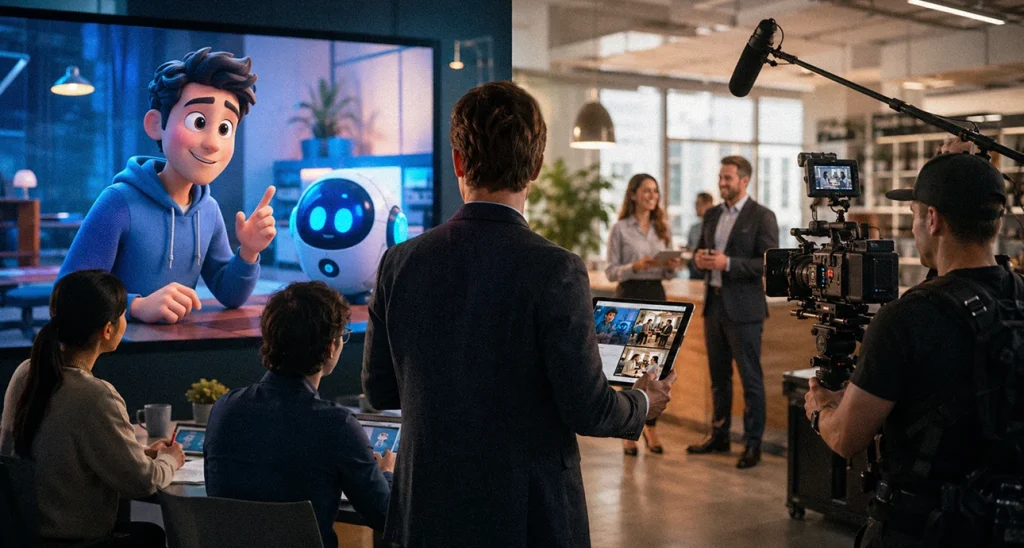
The debate between 3D animation and live-action video is not new, but the answer is shifting fast across the USA.
Businesses are no longer picking based on what looks cool. They are picking based on what converts, what scales, and what actually fits their growth plans. So let’s break this all the way down.
Why USA Businesses Use 3D Animation
A few years ago, 3D animation felt like something only big studios and Fortune 500 brands could afford. That era is gone. Today, businesses of every size across New York, Austin, and Los Angeles are using 3D animation services USA to tell their stories.
The biggest reason is control. With 3D animation, you control every single frame, every color, every angle, and every detail without worrying about weather, actors, permits, or studio rentals. That kind of creative freedom is genuinely hard to find anywhere else.
What 3D Animation Lets You Do That Live-Action Cannot
- Show the inside of a product without cutting it open
- Visualize concepts that do not physically exist yet
- Create scenes that would cost millions to film in real life
- Resize, recolor, and repurpose assets without reshooting anything
- Maintain brand consistency across every single video deliverable
Why USA Startups Prefer Animated Branding
Startups operate in survival mode most of the time. Every dollar spent needs to pull its weight, and every piece of content needs to work harder than the last. That is exactly why animated branding has become the go-to move for new businesses launching across the USA.
Live-action videos lock you in. Once you film something, changing a product detail or updating a logo means reshooting. Animated content is flexible. You update the file and move on. For startups that pivot often, that flexibility is everything.
The Real Startup Advantage With Animation
Investors respond to clarity. When a startup uses clean, well-produced animation to explain a complex product or service, it signals that the team understands its own vision.
Animated explainer videos have been shown to increase viewer understanding of a product by a significant margin compared to plain text or static visuals. That understanding translates into higher conversion rates, more demo requests, and stronger pitch outcomes.
On top of that, animated branding ages better. A live-action video filmed today will look dated in three years. A well-designed animated brand video holds up much longer and can be refreshed with minimal effort.
3D Animation vs Live-Action Video Costs
Money talks, and this is where a lot of businesses make their final call. The cost comparison between 3D animation and live-action video is more nuanced than most people expect.
Live-action looks cheaper on paper at first. Rent a camera, find a location, shoot for a day. But the real costs pile up fast once you account for crew, talent, lighting, sound, editing, color grading, and revisions.
Cost Breakdown Comparison
| Cost Factor | 3D Animation | Live-Action Video |
| Initial Setup | Software and asset creation | Equipment, crew, location |
| Talent Costs | Animators and designers | Actors, directors, crew |
| Revision Flexibility | Easy to update digitally | Requires reshooting |
| Scalability | Reuse and repurpose assets | New shoot per project |
| Timeline | Predictable and structured | Weather and location dependent |
| Long-Term Value | Assets reused across campaigns | Limited reusability |
For product-focused businesses, especially, 3D animation delivers stronger long-term value. Assets built once can be repurposed across social media, websites, pitches, and trade show displays without spending another dollar on production.
3D Animation for Product Marketing
Product marketing is where 3D animation genuinely shines the brightest. Whether you are selling a consumer gadget, an industrial machine, or a skincare line, animation lets you show your product in ways a camera simply cannot.
3D product animation services in the USA allow brands to showcase internal components, demonstrate functionality step by step, and place products in lifestyle environments that look completely real without requiring a single physical prototype.
Where 3D Wins Every Time in Product Marketing
- Exploding view animations that show how a product is assembled
- 360-degree product showcases that replace static photography
- Simulated use-case scenarios showing the product in action
- Before-and-after comparisons with clean, controlled visuals
- Technical walkthroughs for B2B buyers who need detailed specs
For e-commerce brands in the USA, 3D product animation has become a key driver of reduced return rates. When customers understand exactly what they are buying before it arrives, their expectations match reality more consistently.
Which Video Style Drives Better Results?
This is the question every marketing team eventually has to answer. The honest answer is that it depends on the goal, but 3D animation consistently outperforms live-action in several measurable ways.
For social media content, animation wins on clarity and stopping power. Platforms like Instagram and TikTok favor content that is visually distinct, and a well-produced animation stands out against a feed of user-generated footage.
Engagement Data Worth Knowing
Animated videos tend to hold viewer attention longer than live-action equivalents for product and service explanations. This is because animation removes distractions like imperfect lighting, background noise, or awkward pacing that live-action sometimes carries.
For brand awareness campaigns, both styles perform well. But for conversion-focused content like product demos, explainers, and launch videos, animation gives marketers more control over the message, the pacing, and the viewer experience.
Live-action still has a strong place in testimonials, founder stories, and behind-the-scenes content where authenticity matters more than polish. Knowing when to use each style is the real skill.
Common Mistakes Businesses Make When Choosing a Video Style
A lot of businesses make this choice based on budget alone, without thinking about long-term usage. That approach almost always leads to regret.
Choosing live-action for a product that is still in development means you may need to reshoot when the product changes. Choosing animation without thinking about brand consistency means your animated assets might not match your overall visual identity.
Mistakes to Avoid
- Picking live-action just because it feels more “real” without evaluating the use case
- Investing in animation without a clear brief, which leads to expensive revisions
- Ignoring reusability when calculating production costs
- Treating the two styles as competitors instead of complementary tools
- Skipping a professional team to save money and losing quality in the process
The businesses that get the best results are the ones that think about their content strategy before they think about production format.
The Future of Video Marketing in the USA
The future of video marketing in the USA is clearly leaning toward animation, and the data support that direction. Short-form animated content is growing faster than any other video format on social platforms.
AI tools are making animation faster and more accessible than ever before. But the businesses that will win are not just using any animation. They are using purposeful, brand-aligned, high-quality animation that builds recognition and trust over time.
Where the Industry Is Heading
The lines between animation and live-action are blurring. Hybrid productions that blend real footage with 3D animated elements are becoming the new standard for high-budget brand campaigns in the USA.
For most small and mid-sized businesses, fully animated content will remain the smarter investment. The flexibility, the scalability, and the cost efficiency make it the clear choice for brands that are growing and need their content to grow with them.
Brands that invest in 3D animation vs live-action video strategy planning now will be much better positioned for where the market is heading.
Why USA Startups and Brands Are Making the Switch
Beyond the cost and engagement arguments, there is a cultural shift happening. Audiences in the USA are more comfortable with animation than ever before. From streaming to social media, animated content is everywhere, and it no longer feels reserved for children or gaming brands.
A professional, well-designed animation signals that a brand is forward-thinking. It shows that the business has invested in how it presents itself, which builds credibility with both consumers and investors.
Industries Making the Switch Right Now
- Tech and SaaS companies are using explainer animations to simplify complex products
- Healthcare brands using animation to explain procedures and treatments without disturbing imagery
- Real estate developers use 3D animations to sell properties before they are built
- E-commerce brands are replacing product photography with animated showcases
- Financial services companies are using animation to make dry content more engaging
If you want to explore what animated content could look like for your brand, the 2D animation services Agency at Split Arts builds strategies tailored to specific industries and business goals.
Frequently Asked Questions
Is 3D animation more expensive than live-action video?
The upfront cost of 3D animation can be comparable to a well-produced live-action video. However, animation assets are reusable and easier to update, which makes the long-term cost per use significantly lower than live-action productions that require reshooting for any changes.
Which video style is better for product marketing?
3D animation is generally stronger for product marketing because it allows for detailed visual explanations, 360-degree views, and internal component showcases that live-action cannot easily replicate. It also works without a physical prototype, making it ideal for pre-launch campaigns.
Can small businesses in the USA afford 3D animation?
Yes. The cost of professional 3D animation has decreased significantly with advances in software and workflow tools. Many studios now offer scalable packages that suit small and mid-sized businesses without requiring a large production budget.
Does 3D animation perform better on social media?
Animated content tends to perform well on platforms where visual distinctiveness matters, such as Instagram, LinkedIn, and YouTube. It holds viewer attention longer for product and service explanations compared to talking-head or unscripted live-action formats.
How long does a 3D animation project take?
A typical 3D animation project for a product video or explainer runs between two and six weeks, depending on complexity, length, and revision cycles. Projects with clear briefs and fast approvals tend to finish closer to the shorter end of that range.
Get Professional 3D Animation Services
Split Arts works with businesses across the USA to create 3D animation that is built for real outcomes. From product showcases to full brand campaigns, every project is designed with strategy and performance in mind.
If your business is ready to step up its visual content, reach out to explore what professional animation USA could do for your growth.