
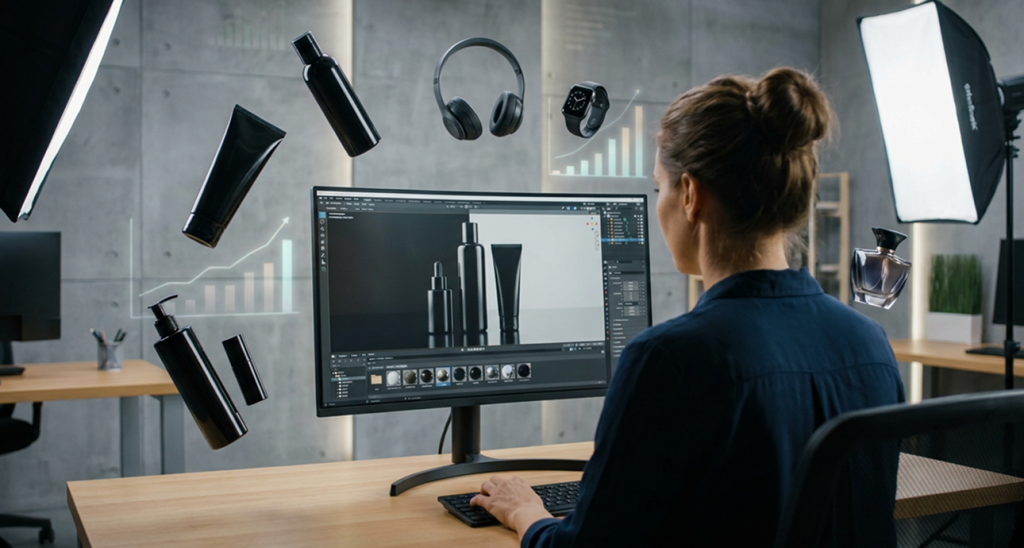
Selling products online depends almost entirely on how those products are presented. Shoppers cannot walk into a store, hold an item, or examine it closely before committing to a purchase.
What they see on a screen is all they have to work with. When that visual experience is weak, it leads to hesitation, abandoned carts, and costly returns.
Professional 3D product animation rendering USA has emerged as one of the most reliable solutions to this problem.
By creating photorealistic digital visuals that show every detail of a product, 3D rendering gives online shoppers the visual confidence they need to buy. For ecommerce brands looking to grow their sales, it is one of the most impactful investments available.
Common Ecommerce Product Display Problems
Most ecommerce brands face the same core challenge. Their products are good, but their visuals do not do those products justice. Standard photography has limitations that become more visible as competition grows and customer expectations rise.
Poor product images are one of the leading reasons online shoppers choose not to buy. According to studies on ecommerce behavior, product visuals are the primary factor in purchase decisions for the majority of online buyers.
When those visuals fail to communicate quality, the sale is lost before the price or description even comes into play.
Most Common Display Problems Ecommerce Brands Face
- Limited viewing angles that leave shoppers guessing about key details
- Inconsistent lighting and color across product listings
- Inability to show internal components or hidden features
- High cost of reshooting when products are updated or discontinued
- Difficulty creating content before a product is physically available
- Generic-looking images that do not differentiate the brand from competitors
These problems compound over time. Brands that do not address them find themselves spending more on photography while still seeing underwhelming conversion rates.
Industries That Benefit From 3D Rendering
3D rendering is not limited to a single product category. It has found wide adoption across industries where visual presentation plays a critical role in the purchasing decision. Any business selling a physical product online can benefit from this approach.
The technology is particularly valuable in industries where product complexity is high. Shoppers buying electronics, furniture, or automotive accessories want to understand exactly what they are getting before they pay. Rendering makes that understanding possible without requiring the customer to visit a store.
Industries That Rely on 3D Rendering
- Consumer electronics and smart devices
- Furniture, lighting, and home decor
- Automotive parts, accessories, and custom components
- Beauty, skincare, and personal care packaging
- Athletic gear and outdoor equipment
- Medical and wellness devices
- Luxury goods, watches, and jewelry
Each of these sectors depends on visual trust.3D animation services USA help brands in every one of these categories build that trust consistently and efficiently.
Benefits of 3D Product Rendering for Ecommerce Sales
The direct impact of 3D rendering on sales performance is well documented. Brands that switch from traditional photography to professional rendering consistently report improvements in conversion rates, lower return volumes, and stronger customer satisfaction scores.
These improvements are not coincidental. They result from the fact that 3D rendering gives customers a more complete and accurate understanding of what they are buying. Better information leads to better buying decisions, which leads to fewer regrets and fewer returns.
How 3D Rendering Improves Sales Performance
- Higher conversion rates from more detailed and engaging product visuals
- Reduced return rates because customers receive exactly what they expected
- Stronger average order values as customers feel more confident in premium purchases
- Better performance on paid ad platforms where high-quality visuals generate more clicks
- Increased time spent on product pages, which signals quality to search algorithms
- Greater brand credibility through consistently polished and professional presentation
Brands investing in 3D product rendering for ecommerce brands gain a compounding advantage. Each new asset adds to a library of reusable visuals that reduce future content costs.
How Professional 3D Product Rendering Solves These Issues
Professional rendering addresses the root causes of poor product display rather than working around them. A skilled rendering studio builds a precise digital replica of the product, then photographs it virtually under controlled conditions that can be adjusted at any time.
This process removes the unpredictability of physical shoots. Lighting, angle, background, and even product color can be changed without touching the original product.
A brand that launches a new color variant no longer needs a full photoshoot. The existing 3D model is simply updated and re-rendered.
How the Rendering Process Works
- The product is modeled in 3D using reference images, design files, or physical measurements
- Textures, materials, and surface finishes are applied to match the real product accurately
- Lighting setups are configured to highlight the product’s most important visual qualities
- Final renders are produced in high resolution for use across all platforms
- Animations or 360-degree views can be generated from the same model at additional stages
This workflow is faster and more flexible than traditional photography once the initial model is complete. Brands that invest early in quality 3D assets benefit from that investment across every campaign that follows.
Product Photography vs 3D Rendering
The debate between photography and rendering comes down to flexibility, consistency, and long-term cost. Photography is familiar and has been the standard for decades. However, it carries limitations that become more apparent as brands scale and their content needs grow more complex.
Rendering was once considered a premium option available only to large companies. That has changed significantly. Professional product photography vs 3D rendering USA comparisons now consistently show that rendering delivers greater value over time, especially for brands managing multiple product lines.
| Factor | 3D Product Rendering | Traditional Photography |
| Viewing Flexibility | Any angle, any zoom level | Limited to what was captured |
| Product Variants | Change color digitally with ease | Requires separate shoot per variant |
| Pre-launch Content | Available from design files | Requires finished physical product |
| Consistency | Identical lighting across all products | Varies between sessions |
| Revisions | Quick digital adjustments | New shoot required |
| Long-term Cost | Decreases as assets are reused | Recurring cost per product update |
| Detail Visibility | Internal features and cutaway views | Surface level only |
Custom 3D Rendering Solutions for Ecommerce Brands
Every ecommerce brand has different needs. A startup launching its first product requires a different approach than an established retailer updating a full catalog. Professional rendering studios offer flexible solutions that scale with those different requirements.
Custom rendering goes beyond producing a standard set of product images. It involves understanding the brand’s identity, the target customer, and the platforms where the content will appear. A product rendered for Amazon listings requires different framing than one designed for Instagram ads or a Shopify homepage.
What Custom Rendering Can Include
- 360-degree product spins for interactive ecommerce platforms
- Lifestyle renders that place the product in a real-world context
- Exploded views that show internal components and construction
- Cutaway renders for technical or industrial products
- Animated sequences for use in video ads and product pages
- Multiple color or material variants from a single base model
This flexibility makes custom rendering one of the most adaptable content tools available to ecommerce brands at any stage of growth.
How 3D Rendering Builds Customer Trust
Trust is the foundation of any successful ecommerce purchase. Shoppers are more cautious online than in physical stores because they are taking a financial risk without being able to inspect the product directly. High-quality visuals play a critical role in reducing that perceived risk.
A photorealistic render that accurately represents the product creates confidence. Shoppers who can see every angle, material, and finish are far less likely to feel misled when the product arrives. That alignment between expectation and reality leads to stronger reviews, more repeat purchases, and higher lifetime customer value.
Ways Rendering Builds Buyer Confidence
- Accurate color and material representation sets realistic expectations
- 360-degree views allow shoppers to inspect the product as if holding it
- Detailed close-ups highlight craftsmanship and build quality
- Consistent visuals across all listings create a sense of brand reliability
- Lifestyle renders help shoppers visualize the product in their own environment
Brands that consistently deliver on the promise made by their product visuals build a reputation that drives organic word of mouth and long-term loyalty.
Why Businesses Choose Split Arts
Split Arts has built its reputation by helping ecommerce brands create rendering assets that directly support sales performance.
From initial modeling through final delivery, Split Arts maintains close communication with each client. The goal is always to produce visuals that reflect the product accurately while making it as appealing as possible to the target buyer.
Every render is optimized for the specific platforms and formats where it will be used.
What Clients Get With Split Arts
- Detailed 3D modeling from reference images, sketches, or technical specifications
- Photorealistic rendering with accurate material and lighting representation
- Fast turnaround suited to product launch timelines and campaign deadlines
- Flexible revision rounds to ensure the final output meets expectations
- Platform-specific formatting for Amazon, Shopify, social media, and digital advertising
- Ongoing support for catalog updates, variant additions, and campaign refreshes
Frequently Asked Questions
What is 3D product rendering?
3D product rendering is the process of creating photorealistic images of a product using computer software rather than a physical photoshoot. It produces high-quality visuals that can be used across websites, ads, and marketing materials.
How does 3D rendering increase ecommerce sales?
Rendering improves how clearly a product is presented to potential buyers. Better visuals reduce purchase hesitation, lower return rates, and increase the time shoppers spend engaging with product listings, all of which contribute to higher conversion rates.
Is 3D rendering more expensive than photography?
The upfront investment in 3D rendering can be comparable to or slightly higher than a professional photography session. Over time, rendering becomes more cost-effective because the same digital assets can be reused, updated, and adapted without scheduling new shoots.
How long does it take to get 3D rendered product images?
Simple products can be rendered within five to seven business days. Products with high complexity, multiple variants, or detailed internal components typically take two to three weeks depending on the scope of the project.
Can 3D rendering be used for products that are still in development?
Yes. This is one of the most practical advantages of rendering. Brands can create accurate, realistic visuals from design files or prototypes before the final product is manufactured. This allows marketing to begin well ahead of launch.
Final Thoughts
Professional 3D product rendering has moved from a niche capability to a mainstream ecommerce tool. Brands that invest in high-quality rendering gain stronger visual assets, more consistent brand presentation, and a content library that grows more valuable over time. The connection between better visuals and better sales is direct and measurable.
Split Arts is ready to help ecommerce brands take that step. Whether you are building your first product library or refreshing an existing catalog, the team delivers rendering that converts. Reach out to Split Arts today and give your products the visual presentation they deserve.
Related Articles:
https://splitarts.com/blog/3d-product-animation-company-in-usa-for-ecommerce-brands/