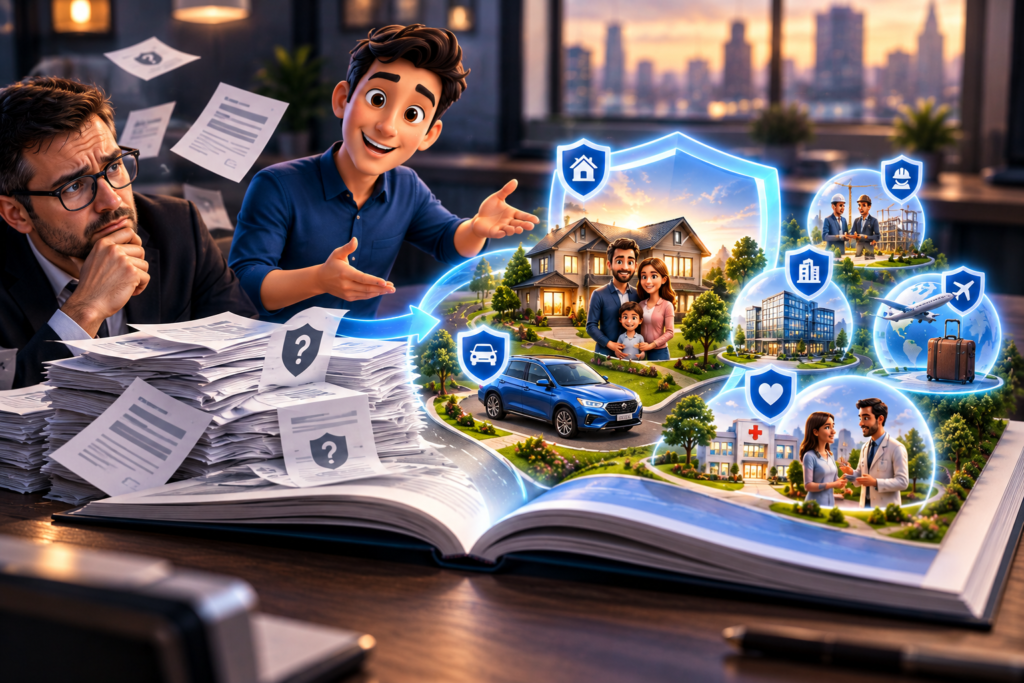
Insurance companies in the United States face a difficult communication problem. Customers are expected to compare deductibles, exclusions, coverage limits, and endorsements before they have experienced the circumstances in which those terms matter.
An explanation can be legally accurate while still being hard to understand. This creates a gap between what a policy says and what a policyholder thinks it says, particularly during claims involving homes, cars, health care, or small businesses.
Three-dimensional animation offers an unusually practical way to close part of that gap. Rather than replacing the policy, a carefully scripted video shows the real-world situation, isolates the relevant decision, and walks the viewer through the consequences. The benefit is not entertainment. It is helping a person understand something important before that information becomes urgent.
How Do USA Insurers Use 3D Animation to Explain Policies?
A meaningful visual explanation begins with one customer question. An auto insurer might want to distinguish collision coverage from comprehensive coverage. A commercial carrier might need to explain when damaged equipment can interrupt business operations. A health insurer may need to demonstrate how a deductible and coinsurance affect the cost of a medical service. Each concept lends itself to a different visual method, so the producer’s first responsibility is understanding the coverage rather than proposing a visual effect.
Reconstructing Physical Events
Property insurance is particularly suitable for three-dimensional visualization because spatial relationships matter. When a storm damages a roof and rain enters through the opening, the event looks different from rising floodwater entering from the ground. A model can distinguish the paths of the water, pause at critical moments, and label the coverage questions. It should not imply that either scenario is automatically covered. Terms, exclusions, deductibles, endorsements, and the circumstances of the loss determine the response.
The same approach can clarify claims involving automobiles, commercial buildings, machinery, or shipments. A camera can expose a hidden component, isolate the point of failure, or show an event from two angles. This is harder to achieve with stock photographs, which often suggest a problem without explaining its mechanism.
Making Financial Terms Visible
Not every concept requires cinematic realism. A deductible might be best represented by a clear financial diagram that moves through a concrete example. For a hypothetical $5,000 covered loss and a $1,000 applicable deductible, the animation can show how the first portion is allocated to the insured, subject to all other policy terms. A coverage limit can be depicted as the maximum under a stated scenario, with additional context about sublimits or conditions. Clear labels, considered pacing, and an accurate script matter more than expensive rendering.
Why Do USA Customers Misunderstand Insurance?
Insurance combines everyday vocabulary with specialized legal meaning. Words such as replacement, liability, covered, and necessary can be interpreted differently in ordinary conversation and in a policy contract. The customer may also be comparing several documents, each with conditions that interact. A short summary can be useful for initial orientation but rarely communicates the full complexity of a claim.
Familiar Terms Can Conceal Unfamiliar Calculations
Health insurance offers a strong example. Someone may know the definitions of copayment, coinsurance, and out-of-pocket maximum but still struggle to calculate costs for a particular service. A visual sequence can separate the steps and show where assumptions change. It should clarify that actual charges, network rules, benefits, and plan terms alter the result. The objective is to teach a method of thinking, not promise a price.
Geography Changes the Questions
An insurance explainer for a Florida coastal customer will often emphasize different risks from one designed for a California homeowner or a Texas industrial operator. State requirements, available endorsements, regional hazards, and insurer practices can vary. Localization should therefore involve substantive review of the policy and examples, not simply adding a state name to the narration. For a national insurer, a common animation framework with approved state-specific variations can balance consistency and relevance.
Can 3D Animation Simplify USA Insurance Exclusions?
An exclusion is often better understood when the viewer sees two scenarios that look similar but depend on different causes. Consider a business premises with water damage. An educational animation might distinguish a sudden covered event from a circumstance excluded under a particular policy, then direct the viewer to the relevant wording. This helps make the question more concrete, provided the visual never implies an unconditional claim outcome.
Explain the Boundary, Not Just the Benefit
Promotional videos tend to emphasize reassurance. Insurance education has a different responsibility. Viewers need to understand what protection does and does not include, where a deductible applies, and when they may need additional coverage. The script should identify the important qualification at the point of explanation. Hiding it in a rushed closing frame defeats the purpose of the video.
A Review Process Is Part of the Product
Compliance review should occur before detailed animation, then again before publication. Product specialists should confirm the hypothetical facts; legal and compliance teams should evaluate qualifications; accessibility reviewers should check captions and visual clarity. The animation studio should maintain a traceable version of the approved script so that later product changes can be reflected accurately.
Does 3D Animation Boost USA Policyholder Engagement?
Animation can make educational content more inviting, but engagement must be defined carefully. Completing a video is not the same as understanding it. The stronger question is whether customers can apply what they learned when comparing policies, asking questions, or using the claims process.
Place the Video Where the Question Appears
A deductible animation belongs near deductible options. A claims-process explanation is useful after a claim has been submitted. A coverage comparison should be accessible while customers are considering different products. A modular video library supports these moments more effectively than a single lengthy promotional film. Short chapters also make updates easier when product wording changes.
Measure Comprehension Alongside Viewing
Useful indicators include completion rates, knowledge-check performance, repeated clarification requests, customer satisfaction, and support contacts about the explained topic. Where feasible, companies can compare similar customer groups shown different communication materials. That provides a firmer basis for evaluating whether animation actually improves understanding.
How to Explain Insurance Visually in the USA
The production team should begin with an authoritative explanation of the relevant coverage. From that, the writer develops one clear learning objective, creates a short scenario, and identifies information that must remain visible. Storyboards can test whether the visual logic is understandable before expensive modeling or simulation begins.
Match the Technique to the Concept
A realistic 3D home is useful for demonstrating physical damage. A simple animated chart may be better for coinsurance. A transparent industrial machine can show internal failure, while a timeline can describe claim-handling stages. Selecting the right visual method keeps the message understandable and the production budget proportionate to the task.
Design for Accessibility and Accuracy
Narration should be concise, captions should be readable, and essential distinctions should not rely on color alone. Some audiences benefit from language localization and alternative accessible explanations. Organizations comparing 3d Animation services USA should assess script development and review discipline as closely as artistic quality.
How Much Does Insurance 3D Animation Cost in the USA?
There is no reliable single price because animation is a custom production service. An explanation featuring simple models and motion graphics has different requirements from a realistic multi-location claim simulation. Custom assets, characters, physical effects, narration, localization, delivery formats, and revision rounds all contribute to the budget.
Budget Around the Work, Not Just the Duration
A 30-second video with complicated simulated destruction might take longer to produce than a two-minute sequence using familiar graphics and reusable assets. An insurer should request a scoped quotation describing the scenes, level of realism, rounds of review, and final files. Broad figures circulating online should not be treated as commitments from any particular studio.
Reuse Carefully Designed Environments
A digital home, office, or vehicle can be reused in additional educational episodes. Models should be structured so new coverage explanations can be added without rebuilding everything. Reuse can improve consistency, although new policy language still requires a fresh accuracy check.
Can 3D Animation Cut USA Insurance Support Calls?
It may help reduce repetitive clarification inquiries when the right educational resource is available at the right moment. A concise claims-status animation, for example, can explain ordinary documentation steps and typical process milestones. It must not substitute for an individual answer where the customer’s circumstances are unusual or disputed.
Build a Searchable Explanation Library
Customer portals can group videos around practical questions about billing, coverage, claims, and renewals. The most useful titles resemble what people actually search for. A video about deductibles should answer the deductible question directly rather than burying it inside a general brand advertisement.
Evaluate Support Outcomes Honestly
Compare contact reasons, repeat inquiries, customer understanding, and satisfaction over suitable periods. Any observed change should be interpreted alongside claim volume, staffing, seasonality, and other service initiatives. Fewer calls are not a success if customers simply stop seeking help because the process has become inaccessible.
How Do USA Agents Close More Policies With Animation?
Agents sell an intangible promise and often have limited time to explain competing options. Animation can give a discussion a shared visual foundation. An agent serving a small manufacturer can introduce equipment-related exposures with a short scenario, then explain which available coverage options may be relevant. The video organizes the conversation but does not replace individualized advice.
Help Customers Compare Rather Than Pressure Them
The best sales use of animation makes differences clear. It can show a deductible choice, illustrate a commonly misunderstood term, or present questions the customer should consider before binding coverage. An informed buyer is better equipped to make a decision and less likely to leave with mistaken expectations.
Which USA Insurance Products Suit 3D Animation?
Property and casualty products have obvious spatial elements, making them natural candidates for modeled environments. Commercial property and equipment breakdown policies can benefit from cutaways and process demonstrations. Auto coverage can use vehicles and carefully scripted incidents. Health insurance is often better served by financial diagrams than realistic human characters. Life insurance may benefit from a timeline explaining broad policy structures, beneficiaries, and coverage duration.
Choose Products With a Clear Learning Problem
Not every line of business needs a high-end production. Prioritize subjects with repeated misunderstandings, meaningful customer consequences, or visually explainable mechanisms. For specialty risks, the insurer should involve technical experts so the illustrative sequence is consistent with actual policy provisions.
How Long Does USA Insurance Animation Take?
Schedules depend on script complexity, modeling requirements, and internal approvals. A focused explainer may take several weeks, while a complex set of animated scenarios may need considerably longer. Insurance work can involve product, legal, compliance, accessibility, and marketing review, so approval time belongs in the schedule from the beginning.
Approve the Story Before Building the World
A revised sentence can affect captions, voiceover, timing, and scene content. Getting the policy concept and storyboard approved early prevents costly late changes. One designated person should consolidate stakeholder comments so the production team receives clear direction.
Make Important Coverage Easier to Understand!
American insurers cannot eliminate the complexity of every contract, and no animation should pretend otherwise. They can, however, make important decisions, calculations, and exclusions easier to understand with thoughtfully chosen visuals. The strongest work respects the policy language, the customer’s circumstances, and the limits of a simplified example.
Split Arts creates visual communication and animation for organizations seeking to explain complex offerings with clarity. When assessing a Top Animation Services Company in USA or selecting a 3d animation Studio, insurance teams should prioritize accuracy, accessibility, and a dependable approval process. The goal is not merely to make a complicated subject look appealing. It is to help people make better-informed decisions.