
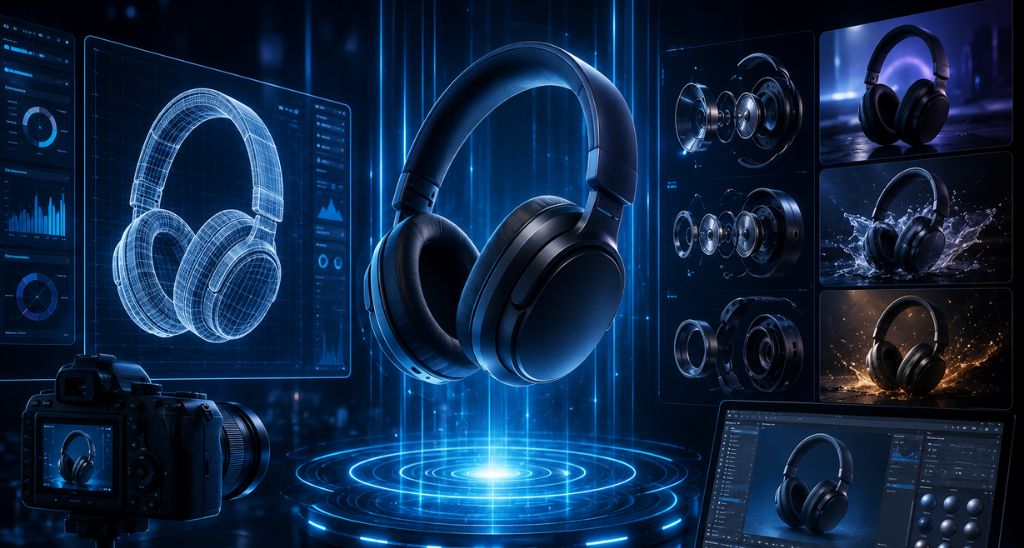
Every brand is fighting for the same three seconds of attention. Scroll speed has gotten faster, ad fatigue is real, and customers swipe past anything that feels flat or boring.
USA markets are some of the most saturated in the world, with thousands of brands selling nearly identical products. Standing out now takes more than a nice photo and a catchy caption.
This is exactly why more companies are turning to 3D product animation to cut through the noise and actually get noticed.
The Challenge of Standing Out in Competitive Markets
Customers today are scrolling through hundreds of products before lunch. Attention spans have shrunk, and competition has multiplied across nearly every category imaginable.
A brand selling skincare, tech gadgets, or home goods is not just competing with direct rivals anymore. It is competing with every single thing fighting for a thumb stop on someone’s feed.
Sameness Is the Real Enemy
Most products in a category look pretty similar at first glance. Packaging trends repeat, photo styles repeat, and even marketing language starts sounding the same after a while.
- Static product photos often blend into a feed instead of standing out
- Competitors frequently use the same lighting setups and angles
- Customers develop banner blindness toward repetitive visual styles
When everything looks the same, brands need a format that genuinely feels different from the crowd.
Why Customers Tune Out Repetitive Visuals
The brain naturally filters out anything that looks too familiar after seeing it a few times. Once a visual style becomes predictable, customers stop actively noticing it, even if the product itself is genuinely good.
This is exactly why brands relying purely on standard photography eventually plateau, no matter how much they increase ad spend trying to push past it.
Why Traditional Product Visuals Often Go Unnoticed
Photography has served brands well for decades, but it comes with built-in limits that are becoming more obvious every single year.
A photo only shows one angle, one lighting setup, and one frozen moment in time. It cannot show movement, internal features, or how a product actually behaves in real use.
The Limits Photography Cannot Escape
- Photos cannot rotate a product to reveal hidden details or angles
- Lighting and shadows are fixed once the shoot wraps for good
- Updating visuals for a new campaign often means a brand-new shoot
- Complex features are hard to explain through still images alone
These limits do not make photography useless, but they do explain why static visuals struggle to hold attention in a feed built for movement.
How 3D Product Animation Captures Customer Attention
Movement catches the eye before anything else does. That is just how human attention works, and 3D animation leans directly into that instinct.
A product that rotates, opens, or assembles itself on screen naturally pulls a viewer’s eye away from everything else around it. That extra second of attention is often the difference between a scroll and a click.
Built To Stop The Scroll
- Animated visuals create motion that static images simply cannot replicate
- Every angle, light setting, and detail can be customized without reshooting
- One 3D model can be reused across ads, product pages, and social content
- Complex products become easier to understand through visual movement
Working with an established 3d product animation company in USA gives brands a library of flexible content that keeps working long after a single campaign ends.
3D Product Animation vs Traditional Product Marketing
Choosing between formats often comes down to what each one can actually deliver over time. The table below breaks down where each approach holds up and where it falls short.
| Factor | 3D Product Animation | Traditional Photography |
| Shows movement | Yes | No |
| Reusable across campaigns | Highly flexible | Limited without reshoot |
| Shows internal features | Yes | Rarely |
| Production cost over time | Lower long-term | Higher with repeated shoots |
| Update for new colors or variants | Fast | Requires a new shoot |
| Scroll stopping power | Strong | Moderate |
Photography still has its place for quick, simple needs. But for brands chasing real attention, animation consistently pulls ahead in the long run.
Benefits of 3D Product Animation for USA Brands
Beyond just looking impressive, 3D animation delivers practical wins that directly affect the bottom line.
Stronger Engagement Across Channels
- Higher watch time and engagement on social platforms
- Better performance on paid ad placements compared to static creative
- Increased time spent browsing product pages
Smarter Long-Term Investment
- One 3D model can generate dozens of assets across different formats
- Updates for new variants or colors take days, not full reshoots
- Content stays visually consistent across every channel and platform
These benefits compound the longer a brand builds out its animation library, making early investment pay off faster than most teams expect.
How Leading USA Companies Use Product Animation
Tech, beauty, and consumer goods brands have led the charge, but adoption is spreading fast across nearly every category right now.
Electronics brands use animation to reveal internal components that photography simply cannot capture. Beauty brands use it to show texture, application, and product behavior in a way that feels almost tactile through a screen.
Partnering with a reliable 3D Animation Agency gives growing brands access to the same level of polish that bigger competitors are already using to win attention in their category.
Why 3D Product Animation Delivers Better Marketing Results
At the end of the day, marketing comes down to attention and conversion. Animation tends to win on both fronts when compared to flat, static visuals.
Customers stay engaged longer, understand products faster, and feel more confident before purchasing. That confidence directly reduces hesitation at checkout and lowers cart abandonment.
Brands that commit to animation early also build a visual library that keeps paying off across future launches, instead of starting from zero every single time.
Frequently Asked Questions
Is 3D product animation expensive compared to photography?
Pricing varies by complexity, but animation often becomes more cost-effective over time since one model can be reused across campaigns instead of paying for repeated photo shoots.
Can 3D animation work for any type of product?
Yes, it works across nearly every category, from electronics and beauty to furniture and food packaging, since the technique adapts to almost any shape or material.
How long does a 3D product animation take to produce?
Simple animations can take a couple of weeks, while detailed projects with moving parts or complex materials may take longer, depending on the scope.
Does 3D animation replace photography completely?
Not always. Many brands use both together, relying on photography for quick needs and animation for campaigns that need movement and deeper engagement.
What makes 3D animation more attention-grabbing online?
Motion naturally draws the eye faster than still images, which means animated product content tends to hold attention longer in fast scrolling feeds.
Get Professional 3D Product Animation Services
Standing out in a crowded market is not optional anymore. Brands that keep relying on flat, static visuals are leaving attention on the table every single day.
Split Arts works with USA brands as the best 3D animation company USA choice for turning ordinary products into content people actually stop for. Reach out today and find out what your product looks like when it finally gets the spotlight it deserves.