
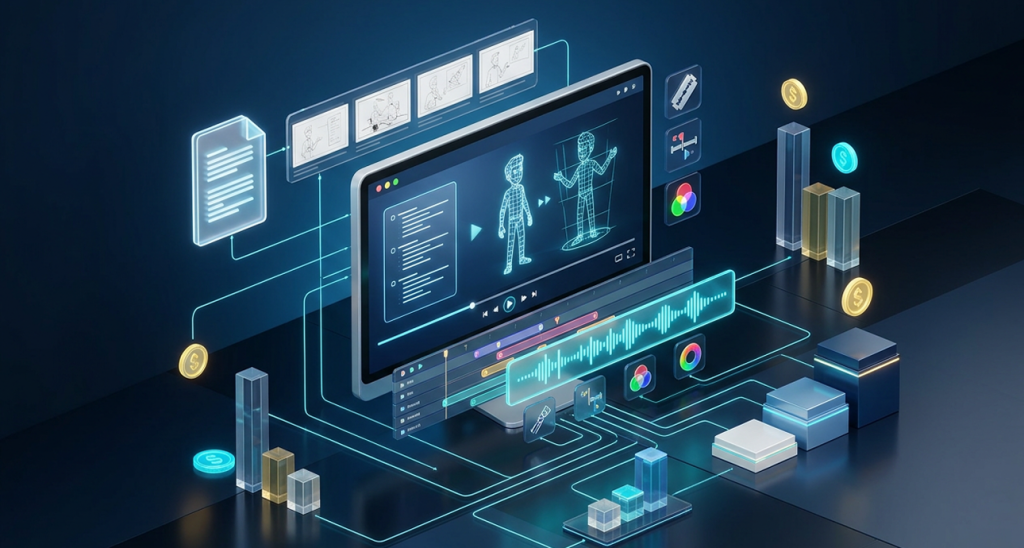
In 2026, an explainer video costs between $500 and $50,000+, depending on animation style, length, and production quality. Most startups and SaaS companies spend $3,000–$8,000 for a custom explainer video that includes professional scripting, voiceover, original design, and motion graphics. Template-based videos start near $500, while enterprise 3D campaigns can exceed $50,000.
But pricing is only half the story. Most businesses searching for explainer video costs don’t just want a number they want to understand what actually affects the price and which investment level delivers the best return.
For startups, SaaS companies, AI products, and modern digital brands, explainer videos have become essential for product education, onboarding, conversion optimization, paid advertising, and customer engagement.
One of the biggest misconceptions in the industry is that expensive animation automatically leads to better performance. At Split Arts, we’ve repeatedly seen simple motion graphics videos outperform high-budget productions because the messaging was clearer and the storytelling was more customer-focused. Many businesses overspend on visual complexity while underinvesting in scripting and communication strategy.
Key Takeaways
- Average explainer video cost in 2026: $3,000–$8,000 for most custom SaaS and startup videos.
- Biggest cost drivers: scripting complexity, animation style, custom illustration, and revision rounds not just “animation quality.”
- 2D vs 3D: 2D animation is cheaper because it requires no modeling, texturing, or heavy rendering.
- Best startup budget: $3,000–$6,000 balances quality and affordability.
- What improves performance: message clarity and storytelling not visual complexity.
Average Explainer Video Cost in 2026
The cost of an explainer video depends on six core variables: animation style, video length, scripting quality, creative complexity, production workflow, and revision requirements.
Here is a realistic industry breakdown for 2026.
| Video Type | Average Cost | Best For |
|---|---|---|
| Template-Based Videos | $500–$1,500 | Internal content, early-stage businesses |
| Basic 2D Animation | $1,500–$3,000 | Small startups, MVP launches |
| Custom 2D Explainer Videos | $3,000–$8,000 | SaaS, onboarding, product marketing |
| Premium Motion Graphics | $8,000–$15,000 | Tech brands, launch campaigns |
| 3D Product Animation | $10,000–$25,000+ | Medical, industrial, electronics |
| Enterprise Video Campaigns | $25,000–$50,000+ | Global brands and large campaigns |
Most growth-focused startups and SaaS companies typically invest between $3,000 and $8,000.
This range usually includes custom scripting, professional voiceover, original design assets, motion graphics, strategic storytelling, and platform-ready delivery. If you’re evaluating a custom production, our explainer video production services page outlines exactly what’s covered at each stage.
What Actually Increases Explainer Video Costs?
Many businesses assume animation quality is the primary cost factor. In reality, the biggest pricing variables are production time, scripting complexity, creative strategy, custom illustration, and revision rounds.
Understanding these factors helps businesses avoid overspending on unnecessary production elements.
1. Animation Style
Animation style directly affects production time, rendering requirements, creative labor, and revision flexibility.
2D explainer videos remain the most common format in 2026 because they are scalable, easier to update, cost-efficient, and highly effective for SaaS communication. They’re widely used for SaaS onboarding, AI tools, fintech platforms, startup products, and mobile apps. Many modern SaaS brands now prefer lightweight 2D motion graphics because they load faster, communicate products clearly, and perform well across paid advertising campaigns. For a deeper look at how video influences engagement and conversions, see Wyzowl’s Video Marketing Statistics.
3D explainer videos involve product modeling, texturing, lighting, rendering, and simulation work making them significantly more expensive than standard 2D animation. 3D product animation is commonly used for medical devices, electronics, manufacturing systems, automotive products, and industrial equipment. One of the most common startup mistakes is investing heavily in cinematic 3D before validating product positioning or messaging clarity. In most early-stage campaigns, strong storytelling outperforms visual complexity.
2. Scriptwriting Quality
Scriptwriting is the most underestimated part of explainer video production. A weak script creates poor engagement, low retention, unclear messaging, and weaker conversions. A strong script improves customer understanding, watch time, onboarding clarity, and conversion performance.
We’ve consistently observed that videos with clear, problem-focused messaging outperform visually impressive videos with weak communication structure. Good explainer video scripts focus on audience pain points, positioning, simplicity, narrative pacing, and solution clarity.
3. Custom Illustration & Branding
Template-based videos are cheaper because they reuse stock graphics, generic characters, and pre-made scenes. Custom production requires original illustration, brand-aligned visuals, unique scene development, custom transitions, and storytelling design systems.
Custom visuals improve brand recognition, uniqueness, visual consistency, and long-term marketing value. This matters most in competitive SaaS and AI industries, where many brands now use similar-looking motion graphics.
4. Revision Rounds
Revision rounds are one of the largest hidden cost factors in video production. Most agencies include 2–3 revision rounds. Additional revisions raise costs because changes often require re-animation, scene redesign, updated rendering, and revised sound synchronization.
Projects with unclear direction almost always become more expensive over time. The most cost-efficient productions begin with clear objectives, organized feedback, finalized messaging, and strong creative planning.
5. Voiceover & Sound Design
Professional voiceovers improve pacing, emotional delivery, clarity, and perceived quality. Businesses generally choose between AI-generated narration, freelance voice artists, and professional studio recording.
Sound design affects viewer retention more than most businesses realize. Background music and subtle sound effects help maintain engagement, pacing, immersion, and emotional flow.
2D vs 3D Animation Pricing: Which Should You Choose?
The single biggest pricing decision is 2D versus 3D animation. Here’s a direct comparison.
| Factor | 2D Animation | 3D Animation |
|---|---|---|
| Typical cost | $1,500–$8,000 | $10,000–$25,000+ |
| Production time | 2–8 weeks | 6–12+ weeks |
| Best use case | SaaS, apps, onboarding, ads | Medical, industrial, product demos |
| Ease of updates | Easy and cheap | Expensive and slow |
| Rendering load | Low | High |
Is 2D animation cheaper than 3D? Yes. 2D animation requires no 3D modeling, texturing, or heavy rendering, so it costs less and ships faster. Choose 3D only when physical product detail genuinely needs depth and realism for example, a medical device or a piece of industrial machinery.
Hidden Explainer Video Costs Most Businesses Ignore
Many companies budget only for animation and overlook additional production expenses. Common hidden costs include:
- Rush delivery fees
- Subtitle and caption creation
- Localization for international markets
- Additional platform exports and aspect ratios
- Music and footage licensing rights
- Extra storyboard revisions
- Alternate voiceover versions
Localization is becoming increasingly important, as many SaaS and AI companies now create region-specific campaigns for international audiences. Building these needs into your initial brief prevents budget surprises later.
Freelancer vs Agency vs DIY Pricing
Businesses typically choose between DIY platforms, freelancers, and professional agencies. Each option serves a different need.
| Option | Average Cost | Best For | Main Limitation |
|---|---|---|---|
| DIY Platforms | $500–$1,500 | Internal videos | Generic visuals |
| Freelancers | $1,000–$5,000 | Small businesses | Inconsistent workflows |
| Agencies | $3,000–$25,000+ | Growth-focused brands | Higher investment |
Freelancers can work well for smaller projects, but agencies usually provide strategic planning, production consistency, creative direction, scalable workflows, and long-term brand alignment. Businesses using video heavily across marketing channels generally benefit more from a structured production system.
For a full breakdown of this decision, read our guide: Freelancers vs Animation Agencies: Which Is Better for Businesses?
Are Expensive Explainer Videos Worth It?
Not always. Many of the highest-performing explainer videos online use simple motion graphics, concise storytelling, clean pacing, and straightforward communication rather than highly cinematic animation.
In most SaaS campaigns, clarity outperforms visual complexity. This is especially true for onboarding videos, landing pages, product explainers, and startup launches. The most effective videos focus on customer problems, product clarity, positioning, and viewer understanding not visual overload.
Best Explainer Video Budget for Startups
For most startups in 2026, the ideal budget range is $3,000–$6,000.
This range typically provides custom scripting, original design, professional voiceover, quality animation, and strategic storytelling without unnecessary production complexity.
Many startups overspend trying to appear “enterprise-level” before validating their messaging, onboarding, customer understanding, and product-market fit. During early growth stages, strong communication usually matters more than expensive visuals. If your product is software-first, a focused SaaS explainer video is often the most cost-efficient starting point.
How Long Does Explainer Video Production Take?
Average production timelines in 2026:
| Video Type | Timeline |
|---|---|
| Template Video | 3–7 days |
| Basic Motion Graphics | 2–3 weeks |
| Custom Explainer Video | 4–8 weeks |
| Premium 3D Animation | 6–12+ weeks |
The biggest timeline delays usually come from feedback bottlenecks, revision cycles, script changes, and approval delays not the animation itself.
How to Get an Accurate Explainer Video Quote
To receive a precise quote rather than a wide range, share these details with any studio:
- Video length 30, 60, or 90+ seconds.
- Animation style template, custom 2D, motion graphics, or 3D.
- Script status finished, drafted, or needs to be written.
- Voiceover preference AI, freelance, or studio recording.
- Deliverables number of platform formats, aspect ratios, and languages.
- Deadline standard timeline or rush.
The clearer your brief, the tighter and more accurate your quote. You can request a free quote from Split Arts with these details to get started.
Why Businesses Choose Split Arts
Split Arts creates explainer videos for SaaS companies, AI startups, healthcare brands, tech products, and digital businesses.
Our process combines strategic scripting, modern motion graphics, cinematic storytelling, conversion-focused communication, and platform-optimized production. We also help businesses with 3D product animation, explainer video production, onboarding videos, and startup launch visuals. You can browse real examples in our animation portfolio.
One of the biggest lessons we’ve learned from working with startups is simple: the best-performing explainer videos are usually the clearest not the most visually complicated.
Final Thoughts
Explainer video pricing in 2026 depends on far more than animation quality. The most important factors are messaging clarity, storytelling structure, audience understanding, production strategy, and communication simplicity.
Businesses that focus only on visuals often overspend without improving performance. The strongest explainer videos simplify products, improve customer understanding, and support long-term marketing goals across landing pages, onboarding systems, paid ads, product launches, and social media campaigns.
For most businesses, investing in strategic scripting, customer-focused storytelling, and clear communication delivers better long-term ROI than chasing production complexity alone.
Frequently Asked Questions
How much does a 60-second explainer video cost?
A professional 60-second explainer video typically costs $3,000–$8,000, depending on animation style, scripting quality, and production complexity.
Why are explainer videos expensive?
Professional explainer videos require scripting, storyboarding, illustration, animation, editing, voiceover recording, and sound design. High-quality production involves multiple creative specialists, which is reflected in the cost.
Is 2D animation cheaper than 3D animation?
Yes. 2D animation is more affordable because it requires less rendering, no 3D modeling or texturing, and shorter production time than 3D animation.
What affects explainer video pricing the most?
The biggest pricing factors are animation style, script complexity, custom illustration, revision rounds, production quality, and video length.
What is the best explainer video budget for startups?
Most startups achieve the best balance of quality and affordability within the $3,000–$6,000 range for custom explainer video production.
What type of explainer video works best for startups?
Most startups prefer 2D motion graphics or product-focused animations because they balance affordability with strong communication.
How long does it take to produce an explainer video?
A custom explainer video usually takes 4–8 weeks. Template videos can be ready in 3–7 days, while premium 3D animation may take 6–12+ weeks.
Can a cheap explainer video still perform well?
Yes. A lower-budget video with a clear, problem-focused script and clean motion graphics often outperforms an expensive video with weak messaging.