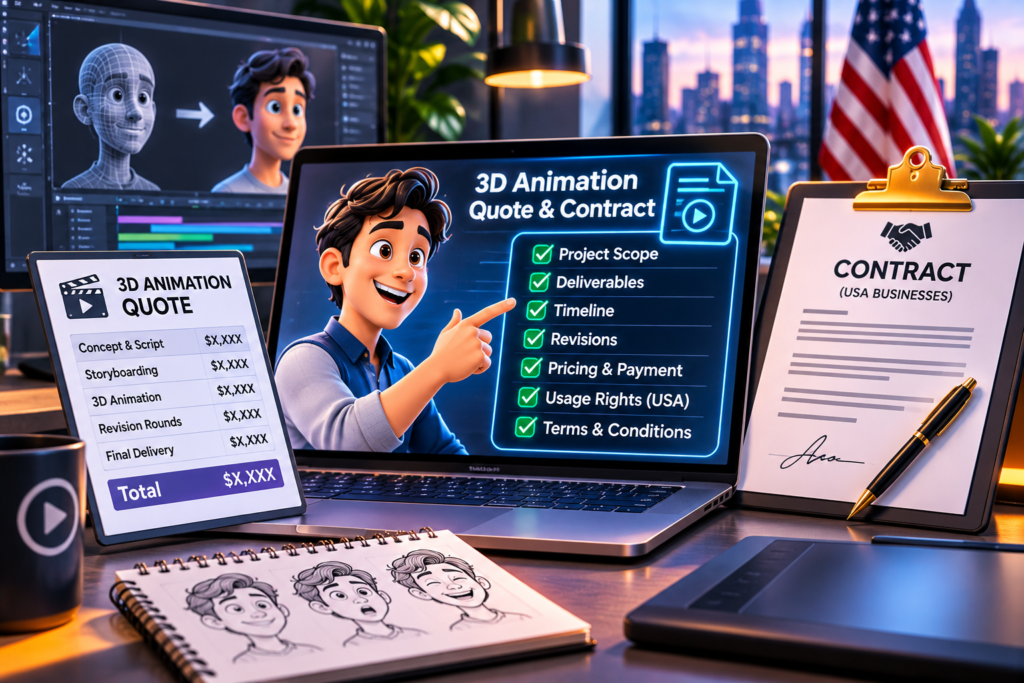
A beautiful showreel cannot resolve an unclear contract. When a brand commissions 3D animation, the creative brief and commercial agreement must describe the same project. Otherwise, a request for a second aspect ratio or an editable model can become a costly disagreement. A detailed quote makes creative ambition possible by setting clear expectations from the beginning.
What Should a 3D Animation Quote Include?
A useful quote identifies the project’s objective, estimated length, visual style, asset requirements, production stages, deliverables, revision allowance, schedule, and price. It should also separate included services from assumptions and exclusions. If a quote says only “60-second 3D video,” the client cannot know whether character modeling, voiceover, subtitles, or alternate aspect ratios are included.
Before approving the quote, confirm who will provide the script, product references, brand guidelines, and other source materials. Also establish who has final approval over the creative work. When comparing a 3D animation studio, check that its proposal explains these responsibilities instead of leaving important details open to interpretation.
3D Animation Pricing Factors: What Affects the Final Quote?
Several factors influence the cost of 3D animation, including asset complexity, character rigging, simulations, realistic materials, scene count, rendering, audio, and the number of deliverables. A short, technically complex film may require more work than a longer, straightforward explainer.
Ask vendors to identify the decisions most likely to affect the budget. Reducing the number of unique environments, for example, may save more time and money than removing a few seconds from the final runtime.
The production team should also understand how the finished animation will be used. A sales team, engineer, campaign manager, or web developer may identify practical issues that are easy to miss in a presentation. Reviewing the work in its intended setting can help catch problems before final delivery.
How Much Does 3D Animation Cost for USA Businesses?
There is no reliable universal price per minute. A simple product turntable and a cinematic commercial have very different production requirements. Online estimates may also exclude modeling, licensing, revisions, or postproduction.
The safest approach is to compare itemized proposals based on the same brief. Request bids from multiple 3D animation companies in USA and check what each price covers. One quote may include sound design and several video formats, while another may charge for them separately. An unusually low estimate is a reason to ask questions, not automatic proof of better value.
Scope of Work in a 3D Animation Contract: Deliverables, Length, and Formats
The contract should specify the expected runtime, aspect ratios, resolution, frame rate, file formats, language versions, captions, and still images. It should also state whether editable project files and source assets are included.
If a campaign needs landscape, portrait, and square versions, clarify whether each version will receive a separately composed edit or simply be cropped from the original. Automatic cropping can cut off important visual details, text, or products.
The agreement should also identify the approval stages and the materials the client must supply. Clear requirements help both parties understand what successful delivery looks like before production begins.
How Many Revisions Should a 3D Animation Contract Include?
Revision terms should distinguish corrections from changes in direction. Two review rounds at the storyboard and animation stages may suit some projects, but the right allowance depends on the complexity of the work and the number of stakeholders.
Define what counts as one revision round, who consolidates feedback, and how additional changes will be priced. For example, correcting a spelling error is different from changing the script after the scenes have been rendered. If a major change affects the approved scope, the contract should explain how the additional cost and delivery date will be agreed upon.
Who Owns the Final 3D Animation? Usage Rights and Licensing Explained
A contract should distinguish ownership of the finished video from ownership of the underlying models, rigs, fonts, stock assets, music, and software-dependent source files. Usage rights may also vary by territory, duration, platform, and exclusivity.
Paying for a finished animation does not automatically mean every source file or third-party asset becomes the client’s property. Before signing, confirm where the animation can be used, how long those rights last, and whether the client can edit or repurpose the work later. For substantial intellectual-property transfers or licensing arrangements, legal counsel can help clarify the agreement.
3D Animation Payment Terms, Milestones, and Delivery Timeline
Payment schedules often follow major production milestones, such as briefing, style-frame approval, animatic approval, animation, and final delivery. The contract should state when each payment is due and what happens if the project is delayed because of late feedback or missing materials.
It should also establish an acceptance process and a reasonable period for reporting technical defects. Finally, clarify who will archive the project files and how long they will remain available after launch. These details help prevent disagreements once the final invoice arrives.
Red Flags in a 3D Animation Quote Before You Sign
Watch for vague deliverables, undefined revision limits, unclear music licenses, unrealistic deadlines, and promises of unlimited changes without any explanation of scope. Missing cancellation terms and unclear responsibility for client-supplied assets can also create problems.
Choosing the best 3D animation company is not simply about finding the lowest price or the most impressive showreel. Review the proposal, ask how feedback will be handled, and confirm what happens if the project requirements change. A strong agreement should protect both sides while leaving room for a productive creative process.
A Real-World Production Checklist
Before approving a project, confirm the intended audience, distribution channel, main message, and evidence behind any technical or commercial claims. Identify the people responsible for script approval and final delivery approval.
Record the required dimensions, languages, accessibility needs, source materials, and usage rights. Keep feedback in one version-controlled document so conflicting comments do not reach the production team. Before accepting the final files, test them in the environment where they will actually be used. A polished preview is not a substitute for a working deliverable.
Frequently Asked Questions
1. What should businesses check before accepting a 3D animation quote?
Check the scope of work, deliverables, production schedule, revision allowance, payment milestones, and licensing terms. Make sure the quote clearly identifies additional costs and explains what happens if the project requirements change.
2. Should a 3D animation contract include source files?
Yes, if your business expects to edit, update, or repurpose the animation later. The contract should state which source files are included, whether extra fees apply, and whether any third-party licenses restrict their use.
3. How many revision rounds should a 3D animation project include?
The number depends on the project’s complexity and approval process. The contract should specify the included rounds, when feedback is due, and how additional revisions or major changes will affect the price and schedule.
4. Who owns the animation after the final payment?
Ownership depends on the contract. Some agreements transfer rights to the finished animation, while others grant specific usage rights and retain ownership of models or other source assets. Confirm the terms in writing before production begins.
5. What should businesses do if the animation project goes over budget?
Review the original scope and identify what caused the increase. Ask the provider for a written change order outlining the additional work, revised cost, and updated timeline. Approve the change before the extra work begins.
Conclusion
A successful 3D animation project starts with a clear communication goal and a contract that reflects the actual production plan. Defined deliverables, realistic timelines, transparent pricing, and agreed usage rights help businesses avoid preventable disputes.
For USA businesses planning their next project, Split Arts Technologies offers animation and related digital production services. A productive first discussion should cover the intended audience, project requirements, final deliverables, and the evidence needed to make the creative idea work.