Have you ever struggled to understand a complex medical diagram in a textbook? You’re not alone. While traditional illustrations have helped explain human anatomy for decades, they often fall short when it comes to visualizing complex procedures, biological processes, and intricate medical concepts.
Today’s healthcare industry demands more than static images. Doctors, medical students, patients, pharmaceutical companies, hospitals, and medical device manufacturers need clear, engaging, and accurate visual communication. That’s exactly where 3D medical animation is making a significant impact.
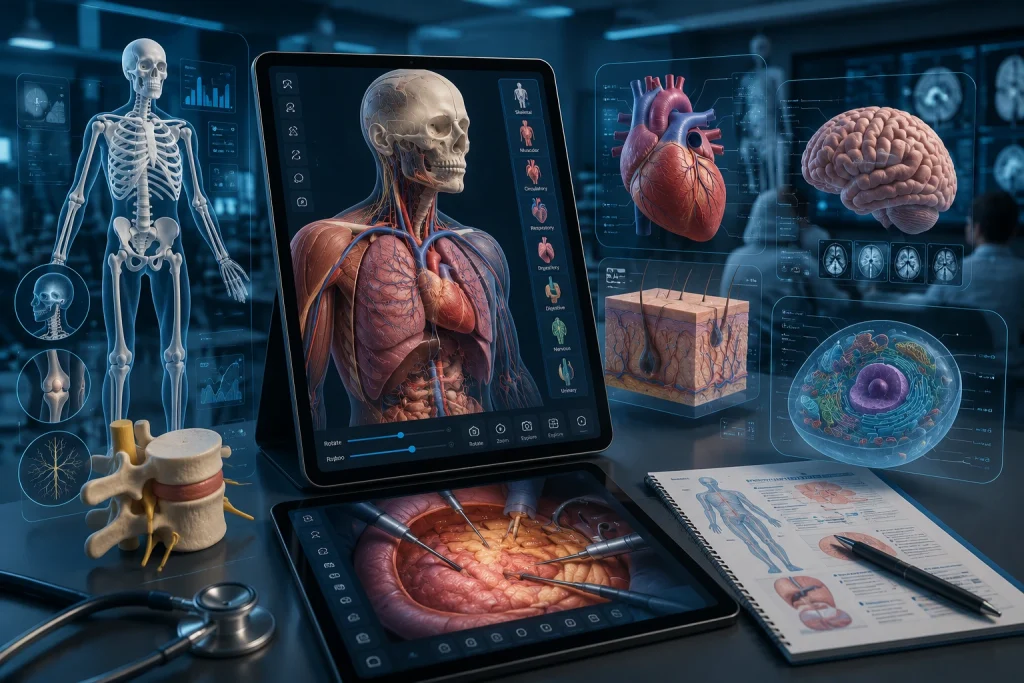
Across the United States, healthcare organizations are increasingly adopting 3D animation to improve medical education, train healthcare professionals, simplify patient communication, and showcase innovative medical technologies. By transforming complex information into realistic visual experiences, 3D animation helps people understand, retain, and apply medical knowledge more effectively.
In this article, we’ll explore why USA healthcare companies are investing in 3D medical animation, its key benefits, and how it is shaping the future of medical education.
The Challenge of Explaining Complex Medical Information
Medicine is complicated. Shocking, we know. The real plot twist is that the people who need to understand it most are usually the least equipped to decode it.
Picture a patient hearing their diagnosis for the first time. Stressed, overwhelmed, brain running at ten percent capacity. Then someone hands them a pamphlet written like a legal contract. Be so for real.
By the time they reach the parking lot, that information is gone. Vanished. And that gap between what was said and what was understood causes real problems.
Why Traditional Medical Content Often Fails to Engage
Static diagrams ask the viewer to do all the work. Imagine the movement, picture the depth, fill in the process yourself. Most brains simply tap out and say not today.
Attention spans are also cooked. If content does not grab someone in three seconds flat, they are gone. Scrolled away, tab closed, mentally checked out mid-sentence.
And printed material cannot evolve. A brochure from 2019 is just sitting there, aging badly, unable to update itself no matter how much the science moves on.
The Difficulty of Simplifying Procedures, Devices, and Treatments
Try explaining how a stent expands inside an artery using only words. Go ahead. We will wait. It falls apart almost immediately because language was never built for this.
Surgeries, implants, and drug mechanisms all happen in places no eyeball can reach. Simplifying that without butchering the accuracy is genuinely hard, and flat content simply cannot carry the load.
Why Visual Learning Matters in Healthcare Education
Most humans are visual learners, and the research says so loudly. Studies on medical education show students perform measurably better when 3D animation replaces traditional teaching.
The brain eats visuals for breakfast. It processes them faster and stores them longer than text. In healthcare, where misunderstanding can affect actual outcomes, that retention gap is the whole ballgame.
Why USA Healthcare Companies Use 3D Animation for Medical Education
Let us be clear. Healthcare brands are not doing this because animation looks cool. Although it does. It absolutely does.
They are doing it because animation solves communication problems the industry has been quietly suffering through for decades. The majority of US medical schools have already pulled 3D visual tools into their curricula. When the big institutions move, everyone else follows.
The Growing Demand for Clear and Accurate Medical Learning Content
Patients today research everything. Before the appointment, after the appointment, at 2am for no reason. They are hungry for content that respects their intelligence without drowning them in jargon.
Brands that feed that hunger with clear, accurate visuals become the trusted source. Brands that do not lose their audience to random internet rabbit holes full of misinformation. Easy choice.
How 3D Animation Makes Complicated Concepts Easier to Understand
Animation is basically a superpower for explaining things. Slow down a heartbeat. Zoom into a single cell. Color-code the chaos. Delete everything that does not matter to the story.
A sixty-second animation can do what a ten-page document dreams of doing. That efficiency is why teams working with 3d animation services USA providers keep coming back with bigger projects every year.
Why Healthcare Brands Prefer Visual Education Tools
One animation trains a thousand staff members and educates a million patients without anyone repeating themselves once. That kind of scale is simply unbeatable.
There is also the comfort factor. Animation explains a surgery without showing actual surgery footage. Patients get the knowledge without the nightmare fuel. Everybody wins.
How 3D Animation Simplifies Medical Training and Patient Education
Two jobs matter most here. Training the people who deliver care, and educating the people who receive it. Animation seriously upgrades both.
Using Animation for Staff Training and Clinical Learning
Clinical teams can watch procedures step by step from angles no camera on earth could capture, all before touching a single instrument. Institutions using animated surgical training have reported real improvements in procedural accuracy.
Training also becomes consistent across the board. Every nurse and physician gets the exact same visual explanation, which kills the variation that comes from different instructors teaching differently.
Explaining Treatments and Procedures to Patients
Pre-surgery anxiety is real and most of it comes from the unknown. When patients watch a calm animation of what is about to happen, fear drops and confidence climbs.
Understanding also drives follow-through. Patients who actually get why a treatment plan matters stick to it, and sticking to it is literally what improves outcomes.
Improving Communication Between Healthcare Providers and Audiences
Doctors do not have twenty spare minutes to explain a condition from scratch. A solid animation does the heavy lifting so the conversation can focus on the patient’s actual questions.
Better yet, one core animation flexes across audiences. Patients, clinicians, investors, sales teams. Same message, adjusted depth, zero mixed signals through the whole care pipeline.
3D Animation vs Traditional Medical Education Content
Both formats exist. Only one of them is winning.
Here are the receipts.
Static Diagrams vs Animated Medical Visualization
| Factor | 3D Medical Animation | Static Diagrams and Text |
| Shows movement and process | Yes, full motion | Nope, use your imagination |
| Knowledge retention | High | Low to mid at best |
| Emotional engagement | Actually makes you feel things | Zero |
| Works for patients and pros | Both audiences | Usually just one |
| Reusable across platforms | Endlessly | Barely |
| Update flexibility | Quick revisions | Full redesign required |
| Long-term value | Keeps paying off | Reprint costs forever |
Why Video-Based Learning Improves Knowledge Retention
Animation stacks visuals, motion, narration, and story all at once. That multi-channel combo is exactly how the brain prefers its information served.
Viewers can also pause, rewatch, and revisit whenever they want. Nobody rereads a brochure. People absolutely rewatch a good animation, and they share it too.
Cost, Flexibility, and Long-Term Value Comparison
Real talk, animation costs more upfront than a brochure. Nobody is hiding that. But one animation serves training, marketing, patient education, and sales for years without printing a single page.
When a device updates or a protocol changes, the animation gets revised instead of rebuilt. Over time the math is not even close. Animation wins comfortably.
Benefits of 3D Medical Animation for Healthcare Brands
The perks go way past education. Animation quietly levels up almost everything about how a healthcare brand talks to the world.
Better Understanding of Medical Concepts
Clear visuals close the gap between what experts know and what everyone else understands. That gap is where confusion, anxiety, and bad decisions all hang out.
Shrink the gap and everything improves. Questions get smarter, consultations get shorter, and patients start feeling like partners in their care instead of confused passengers.
Higher Engagement Across Training and Awareness Campaigns
Animated content flat-out outperforms static content. More watch time, more shares, more completions. Awareness campaigns built on animation simply travel further and hit harder.
The engagement stacks across platforms too. Websites, socials, conference screens, waiting room displays. One asset, everywhere, no reformatting drama.
Stronger Brand Trust Through Clear Communication
Here is a simple truth. Brands that explain things clearly feel trustworthy. Patients and professionals both gravitate toward companies that make complicated things feel manageable.
Working with the top medical animations service USA teams offer means every single visual carries that polish and accuracy. Every view builds a little more credibility.
Where 3D Animation Is Used in Healthcare Education
The list of use cases keeps growing, but three areas are absolutely eating right now across the USA.
Medical Device Demonstrations and Product Training
Device companies use animation to show exactly how a product behaves inside the body. A photo could never. Sales teams walk into meetings with visuals that answer questions before anyone asks them.
3D Product Animation companies build these demos to pull double duty, serving regulatory presentations and commercial launches from the same core assets.
Pharmaceutical Education and Drug Mechanism Explanations
Mechanism of action animations show how a drug moves through the body and does its thing at the molecular level. This content powers everything from FDA presentations to physician education.
Pharma leans hard on animation for one simple reason. The subject matter is invisible. No camera can film a receptor binding, but animation makes it look effortless.
Hospital Training, Surgery Education, and Patient Awareness
Hospitals use animation for staff onboarding, surgical education, and prepping patients before procedures. Many also tap affordable character animation services USA studios provide for friendly content aimed at kids and families.
Character-driven animation hits differently when the audience is young, anxious, or facing something scary. A softer visual style makes hard conversations genuinely easier.
Choosing the Right Medical Animation Partner in the USA
This is not the project to hand to the cheapest bidder. Medical accuracy is non-negotiable, and the wrong partner can do real damage.
Industry Knowledge and Accuracy in Medical Content
An animator with zero medical understanding can accidentally create content that misleads patients. That is not a hypothetical. It happens, and it is a genuinely bad look.
The right partner works from proper reference material, respects the science, and knows exactly when to simplify without distorting what sits underneath.
Experience in 3D Medical and Healthcare Animation
Portfolio depth tells you everything. A studio that has handled device demos, mechanism animations, and patient content understands what each audience expects.
Ask to see relevant work before signing anything. The best 3d animation company for healthcare will have receipts that speak for themselves.
Custom Animation, Compliance, and Communication Support
Healthcare content usually needs compliance and legal review, sometimes multiple rounds of it. A good partner builds that into the process instead of acting shocked when feedback arrives.
Clear communication saves weeks of chaos. The right studio lays out timelines upfront and then, the revolutionary concept, actually sticks to them.
Get Professional 3D Medical Animation Services
Healthcare communication is too important to stay boring and too sensitive to get wrong. The brands winning attention right now are the ones investing in visuals that inform and connect at the same time.
Why Split Arts Is a Strong Partner for Healthcare Animation
Split Arts pairs creative firepower with genuine respect for accuracy. Every project starts with understanding the science and the audience before a single frame moves.
The team has built content for training, product education, and patient awareness, so the process runs smooth whether the client is a hospital, a device brand, or a pharma company.
Custom 3D Animation for Training, Education, and Awareness
No templates, no recycled scenes, no copy-paste energy. Every healthcare brand has its own story, audience, and compliance world, and Split Arts builds around exactly that.
From molecular mechanism videos to full surgical walkthroughs, the output educates clearly and represents the brand like it deserves.
Start Your Medical Animation Project Today
Bring the idea, even a rough one. The first conversation with Split Arts is about understanding what you need, and things move fast from there. Reach out and let us make medical education actually watchable.
Frequently Asked Questions
Why do healthcare companies use 3D animation instead of real footage?
Real medical footage can be graphic, confusing, and limited by what a camera can physically reach. Animation shows what happens inside the body clearly and calmly, from any angle, without making anyone look away.
Is 3D medical animation accurate enough for professional training?
Yes, when a studio that respects science builds it. Leading US medical institutions already use animation in surgical training, and studies show real improvements in learner performance compared with traditional methods.
How much does 3D medical animation cost in the USA?
It depends on length, complexity, and the level of anatomical detail involved. A short patient explainer costs far less than a full mechanism of action video. Split Arts scopes every project individually so the budget is clear from day one.
Can one animation work for both patients and medical professionals?
Often yes. A core animation can be adapted into a simplified patient version and a detailed clinical version, keeping the message consistent while matching each audience’s level of knowledge.
How long does a medical animation project take?
Most projects take several weeks from script to final delivery. Compliance reviews and revision rounds are built into the schedule from the start, so nothing gets rushed and nothing gets skipped.
Key Takeaway!
Healthcare education in the USA is going visual, and honestly, it should have happened years ago. 3D animation explains what words cannot, trains teams consistently, and calms anxious patients before anyone even walks into a room.
Split Arts builds medical animation that is accurate, engaging, and made for real outcomes. Reach out and see what clear visual storytelling can do for your healthcare brand.