
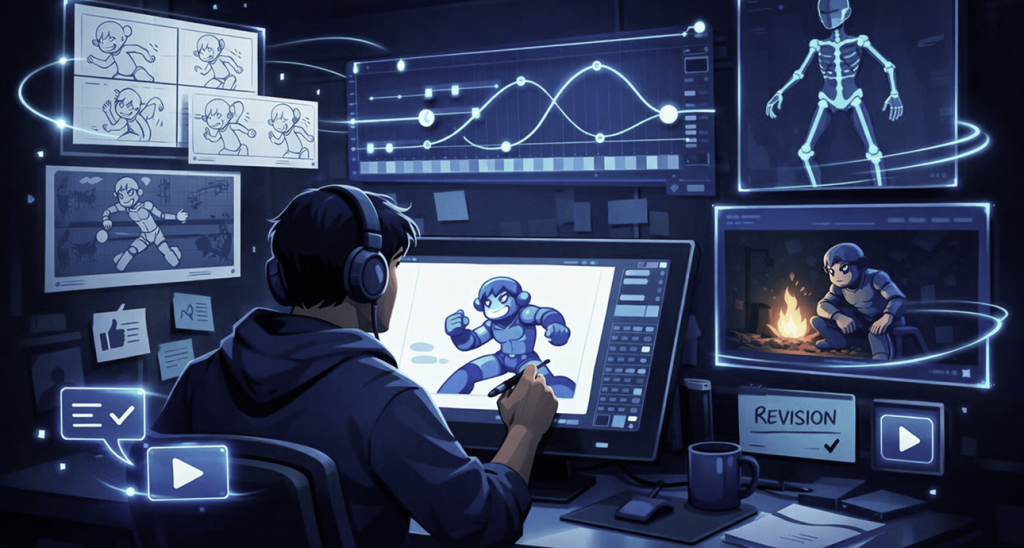
Have you ever wondered who creates the magical worlds in your favorite animated films? Or who brings video game characters to life? Behind every animated sequence, there’s a talented animator working tirelessly to craft movement, emotion, and storytelling through motion.
An animator does go far beyond simply “making cartoons.”
The animator job description encompasses a diverse range of skills, responsibilities, and creative challenges. Whether working on blockbuster films, television shows, video games, or advertising campaigns, animators play a crucial role in modern visual media.
This comprehensive guide explores the animator’s responsibilities, required skills, daily tasks, and the exciting career path that awaits those passionate about bringing imagination to life.
What Does an Animator Do? The Core Definition
At its heart, an animator creates the illusion of movement. They take static images, characters, or objects and breathe life into them through sequential frames. But this simple explanation barely scratches the surface of what animators actually accomplish.
Animators are visual storytellers. They convey emotions, personalities, and narratives through movement and performance. Every gesture, facial expression, and action communicates something to the audience. A skilled animator makes characters feel alive, relatable, and emotionally resonant.
The duties of an animator vary significantly depending on their specialization and industry. A 3D character animator working on a Pixar film has different daily responsibilities than a motion graphics designer creating advertisements. However, all animators share common goals: creating compelling visual motion that serves the story.
The Animator Job Description: Breaking Down the Role
Primary Animator Responsibilities
The animator job description typically includes several core responsibilities that remain consistent across industries.
Creating Character Movement and Performance
Animators bring characters to life through movement. This involves understanding anatomy, physics, and how bodies move through space. But it goes deeper than technical accuracy.
Character animation requires acting through animation. Animators must understand timing, weight, and the subtleties of performance. They study how people express emotions through body language. They observe how different personalities move differently a confident character walks differently than a shy one.
Storyboarding and Planning
Before animation begins, animators often participate in storyboarding. Storyboards are visual blueprints that map out scenes shot by shot. They establish camera angles, character positions, and action sequences.
Storyboarding and character design work requires understanding cinematography, composition, and visual storytelling. Animators must think like directors, choosing angles and framing that enhance the narrative.
Technical Execution
Once planning concludes, animators execute the actual animation. This involves using specialized animation software like Maya, Blender, After Effects, or Toon Boom.
2D/3D animator job description differs significantly in technical execution. 2D animators work frame-by-frame, drawing or digitally painting each movement phase. 3D animators manipulate digital models, setting keyframes and refining motion curves.
The technical aspect requires both artistic sensibility and technological proficiency. Animators must understand software capabilities and limitations while maintaining artistic vision.
Collaboration and Revision
Animation is rarely a solo endeavor. Collaboration with directors, designers, and producers forms a crucial part of the animator workflow.
Directors provide creative vision and feedback. Animators must interpret this guidance and incorporate it into their work. This requires strong communication skills and the ability to accept criticism constructively.
Multiple revision rounds are standard. Animators refine their work based on feedback, adjusting timing, performance, or technical elements until the animation meets project standards.
Animation Roles in Film and Media
The animation industry encompasses numerous specialized roles. Understanding these positions helps clarify what does an animator do in different contexts.
Character Animator
Character animators focus exclusively on breathing life into characters. They create performances how characters walk, talk, gesture, and express emotions.
This role demands strong understanding of acting principles. Character animators study human and animal movement extensively. They often act out scenes themselves, recording reference footage to guide their animation.
Character animators work on everything from feature films to video games. The core skills remain similar, though technical approaches vary by medium.
Technical Animator
Technical animators bridge the gap between art and technology. They create the systems and tools that other animators use.
Rigging represents a major technical animation responsibility. Riggers build the digital skeletons and controls that allow 3D models to move. They create user-friendly interfaces that make complex character movement achievable.
Technical animators also troubleshoot problems. When animations behave unexpectedly or software crashes, technical animators investigate and resolve issues.
Visual Effects (VFX) Animator
CGI and visual effects animators create the spectacular sequences in live-action films. Explosions, magical effects, creatures, and environmental destruction all require VFX animation.
This specialization combines animation with simulation. VFX animators understand particle systems, fluid dynamics, and destruction physics. They make impossible scenarios look believable.
Motion Graphics Designer
The motion graphics designer job role focuses on animated graphic design. These animators create title sequences, lower thirds, infographics, and animated logos.
Motion graphics work appears constantly in modern media. Television news, sports broadcasts, corporate videos, and advertisements all employ motion graphics extensively.
This role emphasizes design principles, typography, and clear communication. Motion graphics animators must convey information quickly and attractively.
Animator Daily Tasks: A Typical Workday
What does a typical day look like for an animator? While every studio and project differs, certain patterns emerge.
Morning: Planning and Reviews
Many animators start their day reviewing feedback from the previous day’s work. Directors and supervisors provide notes on submitted animations. Animators read these carefully, planning their approach to revisions.
Team meetings often occur in the morning. The animation team discusses progress, challenges, and upcoming deadlines. These gatherings foster collaboration and ensure everyone stays aligned with the project vision.
Midday: Active Animation Work
The core of the animator daily tasks involves actual animation production. This is when animators open their software and create.
For character animators, this might mean blocking out a new shot establishing key poses and major movements. They’ll then refine timing, add overlapping action, and polish performances.
Motion graphics animators might design new graphics, animate logo reveals, or create data visualizations. They experiment with different approaches, seeking the most effective visual solution.
Afternoon: Iteration and Polish
Afternoons often involve refining earlier work. Animation requires constant iteration. Animators watch their work repeatedly, identifying areas needing improvement.
They adjust timing by moving keyframes. They refine motion curves to make movements more natural. They add secondary animation hair movement, clothing settling, or subtle facial expressions that enhance believability.
End of Day: Rendering and Submission
Before leaving, animators render their work and submit it for review. Rendering converts animation data into viewable video files. This process can take time, especially for complex 3D scenes.
Animators also organize their files and document their work. Proper file management prevents confusion and makes collaboration smoother.
Essential Animator Skills for Success
Succeeding as an animator requires developing both artistic and technical abilities. The skills needed to become an animator encompass a broad range.
Artistic Skills
Drawing and Design Fundamentals
Even 3D animators benefit from strong drawing skills. Drawing teaches observation, composition, and visual communication. Understanding form, perspective, and anatomy improves animation quality regardless of medium.
Life drawing sessions help animators understand how bodies work. Gesture drawing captures movement and energy quickly, training the eye to see motion.
Timing and Spacing
Timing refers to when movements occur. Spacing determines the distance objects travel between frames. These fundamental concepts separate good animation from great animation.
Proper timing conveys weight, mood, and character. A heavy object moves slowly with gradual acceleration. A light object starts and stops quickly. Mastering timing requires both technical understanding and artistic intuition.
Acting and Performance
Animators are actors who perform through their characters. Understanding acting principles dramatically improves character animation.
Animators study method acting, improvisation, and character development. They learn to empathize with characters, understanding motivations and emotional states. This knowledge informs every movement choice.
Technical Skills
Software Proficiency
Modern animators must master complex software. The specific tools depend on specialization.
Animation software like Maya dominates 3D animation. This industry-standard program offers comprehensive modeling, rigging, and animation tools. Learning Maya thoroughly opens many career doors.
Blender has grown tremendously in popularity. This free, open-source software rivals commercial alternatives. Many studios now accept Blender in their pipelines.
For 2D animation, Toon Boom Harmony leads the industry. This software powers television shows and feature films. Adobe Animate serves web and mobile animation well.
After Effects rules motion graphics. This compositing and animation software creates everything from title sequences to broadcast graphics.
Problem-Solving Abilities
Animation presents constant technical challenges. Files corrupt. Software crashes. Deadlines loom. Successful animators develop strong problem-solving skills.
They learn to troubleshoot independently, searching online forums and documentation. They develop backup habits and organizational systems. They remain calm under pressure, finding creative solutions to unexpected obstacles.
Interpersonal Skills
Communication and Collaboration
The animator workflow involves constant collaboration. Animators must clearly communicate ideas to directors, fellow animators, and other departments.
They receive feedback diplomatically, even when criticism feels harsh. They offer constructive feedback to teammates. They contribute to positive studio culture through professionalism and respect.
Time Management
Animation projects involve strict deadlines. Animators juggle multiple shots simultaneously, each at different completion stages.
Effective time management separates professionals from amateurs. Animators estimate how long tasks take. They prioritize assignments strategically. They communicate proactively when deadlines seem unrealistic.
Career as an Animator: Paths and Opportunities
The animation career path offers remarkable diversity. Animators work in numerous industries, each offering unique challenges and rewards.
Film and Television Animation
Traditional animation strongholds remain film and television. Major studios like Disney, Pixar, DreamWorks, and Sony Pictures Animation produce animated features annually.
Television animation continues thriving. Streaming platforms like Netflix, Disney+, and Amazon Prime Video invest heavily in animated content. This demand creates abundant animation career opportunities.
Working in film and television often means joining large teams. Studios employ dozens or hundreds of animators on major productions. This environment offers mentorship opportunities and the chance to work on high-profile projects.
Animation in Gaming
The gaming industry employs thousands of animators worldwide. Games require extensive animation character movements, environmental animations, cinematic sequences, and user interface elements.
Animation in gaming presents unique challenges. Unlike linear film animation, game animation must respond to player input dynamically. Animators create movement systems that blend seamlessly based on unpredictable player actions.
Game studios range from massive companies like Electronic Arts and Activision to small independent teams. Each environment offers different experiences and growth opportunities.
Animation in Advertising and Education
Animation in advertising and marketing creates immense demand for animators. Every commercial, social media campaign, and product launch potentially requires animation.
Advertising work moves quickly. Projects often have tight turnarounds measured in days or weeks rather than months. This pace suits animators who thrive under pressure and enjoy variety.
Educational animation helps explain complex concepts visually. Medical animations, scientific visualizations, and e-learning content all require skilled animators. This niche offers steady work and the satisfaction of educational impact.
Freelance vs In-House Animator
Animators choose between staff positions and freelance careers. Each path has distinct advantages and challenges.
In-House Animation Work
Staff animators enjoy employment stability. They receive regular paychecks, health benefits, and retirement contributions. They collaborate with consistent teams, building strong working relationships.
However, in-house positions may offer less variety. Animators might work on a single project for months or years. Studio politics and bureaucracy can frustrate creative individuals.
Freelance Animation Career
Freelance vs in-house animator debates continue endlessly in animation communities. Freelancing offers tremendous freedom. Animators choose their projects, set their rates, and control their schedules.
Freelancers enjoy variety. They might animate a music video one month and a medical illustration the next. This diversity keeps work fresh and develops broad skillsets.
However, freelancing brings instability. Income fluctuates. Freelancers handle their own taxes, insurance, and retirement planning. Finding consistent work requires constant networking and self-promotion.
Many animators blend both approaches. They maintain stable studio jobs while taking occasional freelance projects for extra income or creative fulfillment.
Animator Salary Expectations: What Can You Earn?
Understanding animator salary expectations helps aspiring animators plan realistically.
Entry-level animators typically earn modest salaries. Junior positions might pay $40,000-$60,000 annually in the United States. These roles involve simpler tasks under close supervision.
Mid-level animators with several years experience earn $60,000-$90,000. At this stage, animators handle complex shots independently and may mentor junior staff.
Senior animators and animation supervisors command significantly higher salaries. Experienced professionals at major studios can earn $100,000-$150,000 or more. Leadership positions like animation directors earn even higher compensation.
Geographic location significantly impacts salaries. Los Angeles, San Francisco, and Vancouver offer higher pay but also higher living costs. Smaller markets pay less but offer affordable lifestyles.
Specialization affects earnings too. VFX animators often command premium rates due to technical complexity. Character animators at top feature film studios earn well. Motion graphics designers’ salaries vary widely based on employer and project scope.
Freelance animators’ earnings vary dramatically. Successful freelancers charge $300-$1,000 per day or more. However, inconsistent work means annual income fluctuates significantly.
Job Outlook for Animators: Industry Future
The job outlook for animators appears strong. The U.S. Bureau of Labor Statistics projects continued growth in multimedia artists and animators employment.
Streaming services drive significant demand. Netflix, Apple TV+, HBO Max, and others compete fiercely for content. Animated shows and films represent significant portions of their catalogs.
Social media platforms create new animation opportunities. Short-form content on TikTok, Instagram, and YouTube needs animation. Brands employ animators to create engaging social content.
Virtual reality and augmented reality represent emerging frontiers. These technologies require specialized animators to create immersive experiences. As VR and AR adoption grows, animation demand in these fields will increase.
However, the industry faces challenges. Artificial intelligence increasingly assists animation production. While AI won’t replace human creativity soon, it may reduce demand for certain repetitive tasks.
Outsourcing also impacts employment. Studios increasingly send animation work to countries with lower labor costs. Aspiring animators must develop skills that justify higher wages.
Animation Pipeline Stages: Understanding Production Flow
Animators work within larger production pipelines. Understanding animation pipeline stages helps animators appreciate their role in the bigger picture.
Pre-Production
Before animation begins, extensive planning occurs. Writers develop scripts. Artists create concept art. Directors plan shots and sequences.
Storyboard artists visualize the story visually. Their drawings establish pacing, composition, and basic action. This phase prevents costly mistakes during production.
Production
Production is where animation actually happens. This phase varies significantly between 2D and 3D animation.
In 3D animation, modeling comes first. Artists create digital objects and characters. Then riggers build controls for movement.
Animators receive approved models and begin their work. They create movement following storyboards and director guidance.
Simultaneously, other departments work in parallel. Environment artists build settings. Texture artists add surface details. Lighting artists establish mood.
Post-Production
After animation completes, post-production begins. Compositors combine animated elements with backgrounds and effects. Color grading establishes final visual tone.
Sound designers add audio dialogue, sound effects, and music. Editors assemble everything into final sequences.
Understanding this pipeline helps animators collaborate effectively. They know how their work fits into the larger production and what other departments need from them.
Storytelling Through Animation: The Ultimate Goal
Ultimately, all animator responsibilities serve one purpose: storytelling through animation.
Technical skills matter. Software proficiency is essential. But the best animators remember they’re storytellers first, technicians second.
Every movement choice should serve the story. Does this gesture reveal character? Does this timing enhance emotional impact? Does this action advance the plot?
Great animators study storytelling across media. They watch films analytically, noting what makes scenes work. They read novels, understanding character development. They observe real life constantly, gathering reference for authentic performances.
This storytelling focus separates good animators from great ones. Anyone can learn software eventually. But developing storytelling instincts requires years of dedicated study and practice.
Conclusion: The Rewarding Career as an Animator
So, what does an animator do? They create magic. They bring imagination to life. They tell stories that move audiences emotionally.
The animator job description encompasses technical execution, artistic expression, and collaborative teamwork. It requires constant learning, adaptation, and growth.
The career as an animator offers both challenges and rewards. Long hours and tight deadlines test dedication. Technical problems frustrate even experienced professionals. Competition remains fierce for premium positions.
Yet few careers offer animation’s creative satisfaction. Seeing your work on screen watching audiences laugh, cry, or gasp at something you created provides incomparable fulfillment.
Start animating, and discover where this remarkable career can take you.