
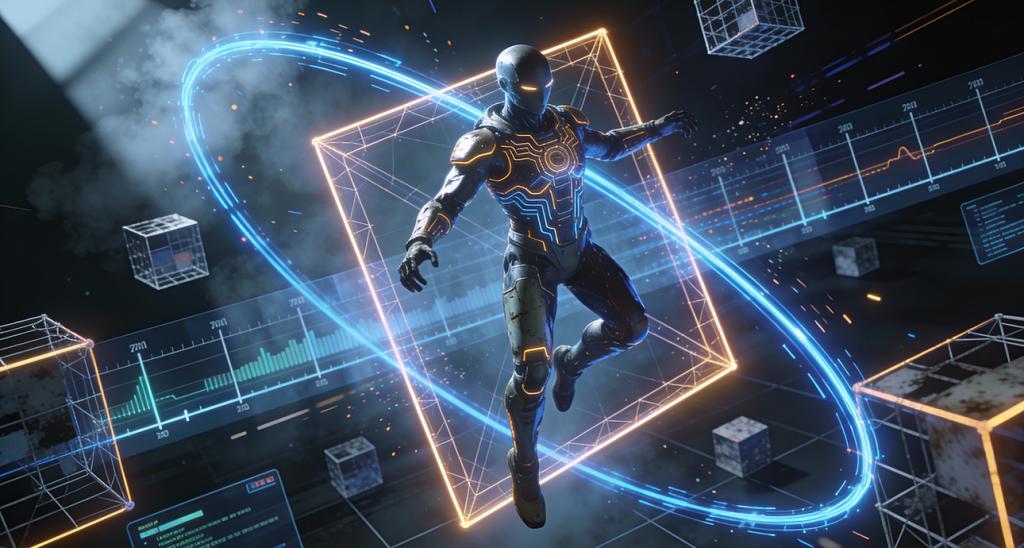
3D animation is the creation of moving images in a three-dimensional digital space. It involves the design, animation, and rendering of digital objects and environments, giving them depth and dimension, making them appear lifelike. Whether used in movies, video games, advertisements, or even virtual reality (VR) experiences, 3D animation plays a crucial role in how we interact with and consume digital content today.
But what exactly is 3D animation? How has it evolved over time? And how is it used today? In this comprehensive guide, we will take you through the history, the process, and the latest trends in 3D animation. We’ll also discuss how you can leverage 3D animation services USA to bring your projects to life.
What is 3D Animation?
3D animation refers to the process of creating moving images using computer-generated 3D models, making objects or characters appear in three-dimensional space. Unlike 2D animation, which works with flat, two-dimensional images, 3D animation adds depth, making it more realistic and interactive.
3D animation is used in everything from feature films, commercials, and video games to architectural visualization and virtual reality (VR). It combines art and technology, with a focus on creating realistic, dynamic, and interactive digital worlds.
Key Stages of 3D Animation:
- Modeling: The creation of 3D objects, characters, and environments.
- Rigging: Adding a skeleton to the models to allow for movement.
- Animation: Bringing the models to life with movement.
- Texturing: Applying colors, details, and materials to models.
- Lighting: Setting up lights in the 3D scene to simulate real-world lighting.
- Rendering: Creating the final 2D images or video from the 3D scene.
A Brief History of 3D Animation
The history of 3D animation can be traced back to the late 1960s and 1970s when the first experiments in computer-generated graphics began. Over the decades, the technology evolved significantly, pushing the boundaries of what was possible. Here’s a detailed breakdown of its evolution:
The Early Years (1960s–1970s)
- 1960s: The foundations of 3D animation began with Ivan Sutherland’s work on Sketchpad in 1963, which was the first graphical software program capable of creating simple drawings and manipulating objects on a computer screen.
- 1970s: The first 3D models were created using early computers, although these were very basic and crude. These models were primarily used in industrial and scientific applications, such as flight simulators and engineering.
The Rise of CGI (1980s)
- 1982: “Tron”, one of the earliest movies to use CGI, brought 3D animation into mainstream cinema. Although the animation was rudimentary by today’s standards, it demonstrated the potential of computer-generated imagery (CGI).
- 1986: Pixar introduced “Luxo Jr.”, a short film featuring a playful desk lamp, which became the first 3D animated film to be widely recognized for its achievements in computer animation.
The Breakthrough (1990s)
The 1990s saw the widespread adoption of 3D animation in both movies and television. The most notable achievement was the release of “Toy Story” (1995), the world’s first full-length feature film created entirely using 3D animation.
- 1993: “Jurassic Park” revolutionized visual effects by bringing realistic dinosaurs to life using 3D animation, combining CGI with live-action footage.
- 1995: Pixar’s Toy Story made history as the first fully 3D-animated feature film, setting a new standard for what was possible with CGI in film.
Modern Era and Realism (2000s–Present)
The evolution of 3D animation reached new heights in the 2000s and continues to push boundaries today. Over the past two decades, the technology behind 3D animation has evolved significantly, leading to some of the most realistic, immersive, and creative works in the history of cinema and entertainment.
Motion capture, AI-powered animation, real-time rendering, and advanced texturing techniques have all transformed the industry, resulting in stunning visuals that captivate audiences worldwide. In this section, we’ll discuss how 3D animation has evolved in recent years, focusing on the latest films and technologies, along with some of the most popular and influential 3D movie series today.
2009: “Avatar” – The Game Changer
In 2009, James Cameron’s “Avatar” set a new benchmark for 3D animation. Not only did it use motion capture technology to create lifelike characters and photorealistic environments, but it also popularized stereoscopic 3D (3D cinema), changing the way films were experienced by audiences worldwide. With its cutting-edge CGI and immersive world of Pandora, “Avatar” showcased the potential of 3D animation in both visual storytelling and realistic environments.
- Stereoscopic 3D and Motion Capture: “Avatar” used motion capture to translate human performances into 3D avatars, enabling real-time rendering of lifelike facial expressions and movements. This innovation set a precedent for future films, making motion capture a standard tool in creating realistic 3D characters.
- Realism in CGI: The film’s innovative use of CGI made Pandora’s landscapes, creatures, and even human characters look incredibly realistic. The integration of virtual environments with live-action footage led to a new era of hyper-realistic animations in film.
2010s: The Rise of Hyper-Realism and Emotional Depth
As the 2010s unfolded, 3D animation began to evolve even further, with a significant focus on realism, especially in texture work, lighting, and facial expressions. This era saw Pixar, Disney, and DreamWorks pushing the limits of their animation software, creating characters that could express emotions with incredible subtleties.
Key Films from the 2010s:
- “Frozen” (2013): Disney’s “Frozen” was a milestone in 3D animation, showcasing not only the realism in textures such as snow and ice but also the emotional depth that 3D animation could convey. The realistic snowflakes, hair simulations, and reflections set new standards for attention to detail in 3D animation.
- “The Incredibles 2” (2018): Pixar’s “The Incredibles 2” delivered some of the most realistic action sequences in animation history, with flawless character movements, lifelike textures, and lighting effects. Pixar utilized advanced rendering techniques to give the characters a cinematic quality that felt incredibly real despite being fully animated.
- “Zootopia” (2016): Zootopia pushed the envelope on texturing and environment rendering, particularly in how it depicted fur simulations and different materials like metal and glass. The film’s visual effects brought the city of Zootopia to life, showcasing how 3D animation could be used for intricate world-building.
2020s: The Cutting Edge of 3D Animation and New Innovations
As we move into the 2020s, 3D animation has reached unprecedented levels of realism and interactivity. With advancements in AI, motion capture, real-time rendering, and cloud-based animation tools, the animation industry is on the verge of creating fully immersive worlds that go beyond traditional film and TV.
Notable 3D Films and Series from the 2020s:
- “Avatar: The Way of Water” (2022): James Cameron’s sequel to “Avatar” pushed the boundaries of 3D animation even further. The film made use of advanced underwater motion capture technology, allowing for lifelike underwater scenes with fully animated characters moving fluidly through water. The technology used for this project is likely to set the stage for future films in terms of photorealism.
- “Spider-Man: Into the Spider-Verse” (2018): One of the most innovative 3D animated films, “Spider-Man: Into the Spider-Verse” combined 2D art with 3D animation, breaking traditional norms of animation. Its comic book-inspired visual style became an instant hit, inspiring studios to experiment with hybrid animation techniques that blend 3D animation with 2D art.
- “Soul” (2020): Pixar’s “Soul” took a more abstract approach to animation, blending real-world realism with surreal, dreamlike sequences. The film’s ability to seamlessly merge realistic textures with abstract environments allowed it to explore deeper philosophical themes while still maintaining a playful and visually stunning aesthetic.
- “The Super Mario Bros. Movie” (2023): The latest 3D animated film, based on the iconic Super Mario franchise, features a blend of vibrant colors, iconic character designs, and cutting-edge 3D animation. The movie uses state-of-the-art animation technology to bring Mario and his world to life, adding more interactive and immersive elements to the animation.
New Technologies Shaping 3D Animation (2026 and Beyond)
As of 2026, the technologies shaping 3D animation are more advanced than ever, offering even more immersive and interactive experiences for audiences.
- Real-Time Rendering: The ability to render 3D environments in real-time is becoming increasingly common in animated films and games. This allows animators to view their work instantly, speeding up the production process. Unreal Engine and Unity are popular game engines being used for real-time animation, making it easier to create interactive 3D experiences.
- AI-Powered Animation: Artificial Intelligence has started to play a key role in the animation process. AI tools are now being used to assist with motion capture, animation smoothing, and even automated rigging. AI also aids in generating more realistic facial expressions by analyzing real-world data, making character interactions appear more genuine.
- Virtual Production: Virtual production, a technique popularized by shows like “The Mandalorian”, uses real-time 3D environments to create interactive virtual worlds. Actors perform in front of LED screens displaying these environments, which are rendered in real-time, combining live-action and CGI seamlessly.
- AI-Generated Characters and Worlds: In the future, AI might assist animators in creating entire 3D worlds or characters based on textual descriptions. This could revolutionize how content is created and democratize animation for smaller creators.
- Interactive Animation: Interactive animation is now on the rise, especially in VR and AR. With platforms like Oculus Rift, PlayStation VR, and Microsoft HoloLens, 3D animation has become immersive and interactive, allowing viewers to engage with animated characters and environments in ways that were previously impossible.
The 3D Animation Process: Step-by-Step
While the overall process of 3D animation may seem complex, it can be broken down into distinct stages, each of which is crucial to the final product. Here’s how the process works:
1. Pre-Production: Planning and Design
In pre-production, the groundwork for the animation project is laid. This phase involves:
- Concept Development: Brainstorming ideas and defining the theme, style, and purpose of the animation.
- Script Writing: Crafting the storyline, character dialogue, and action sequences.
- Storyboarding: Creating visual sketches of key scenes to determine the structure and flow of the animation.
- Character and Environment Design: Creating concept art for characters, settings, and props.
2. Modeling: Creating 3D Objects
Modeling is the process of creating digital 3D models of characters, props, and environments. 3D artists use specialized software like Autodesk Maya, Blender, or ZBrush to build the models from scratch, using polygons to shape objects.
At Split Arts, we specialize in crafting high-quality 3D models tailored to your project, whether it’s a realistic human character or a futuristic vehicle.
3. Rigging: Adding Bones and Joints
Once models are ready, rigging adds a skeleton to them, allowing for realistic movement. This is the stage where the models become animated. Rigging involves creating a set of joints and bones inside the model that controls its movement and deformation.
4. Animation: Bringing the Models to Life
Animation is the process of creating movement. This involves setting keyframes (specific points in time) and letting the software generate the in-between frames. Motion capture can also be used to apply real-world human movements to 3D models.
We help you achieve fluid and lifelike character animations, ensuring every move, expression, and gesture matches your vision.
5. Texturing, Lighting, and Rendering
- Texturing: This step adds color, detail, and material to the models, such as skin, clothes, or metal surfaces.
- Lighting: Virtual lights are placed in the 3D scene to simulate how light interacts with objects, giving the scene a realistic feel.
- Rendering: The final step, where the 3D scene is converted into 2D images or video frames.
Conclusion
The world of 3D animation is rapidly evolving, with new technologies and innovations pushing the boundaries of what is possible. From motion capture and real-time rendering to AI-powered animation and interactive experiences, the potential of 3D animation has never been more exciting.
As we move further into 2026, the line between reality and animation will continue to blur, offering audiences more immersive, realistic, and interactive experiences than ever before. We are proud to be at the forefront of this exciting era, offering high-quality 3D animation services that leverage the latest technologies to bring your vision to life.
Ready to create your next 3D animated masterpiece? Get in touch with us today to discuss how we can help bring your creative ideas to reality using the latest in 3D animation technology!