
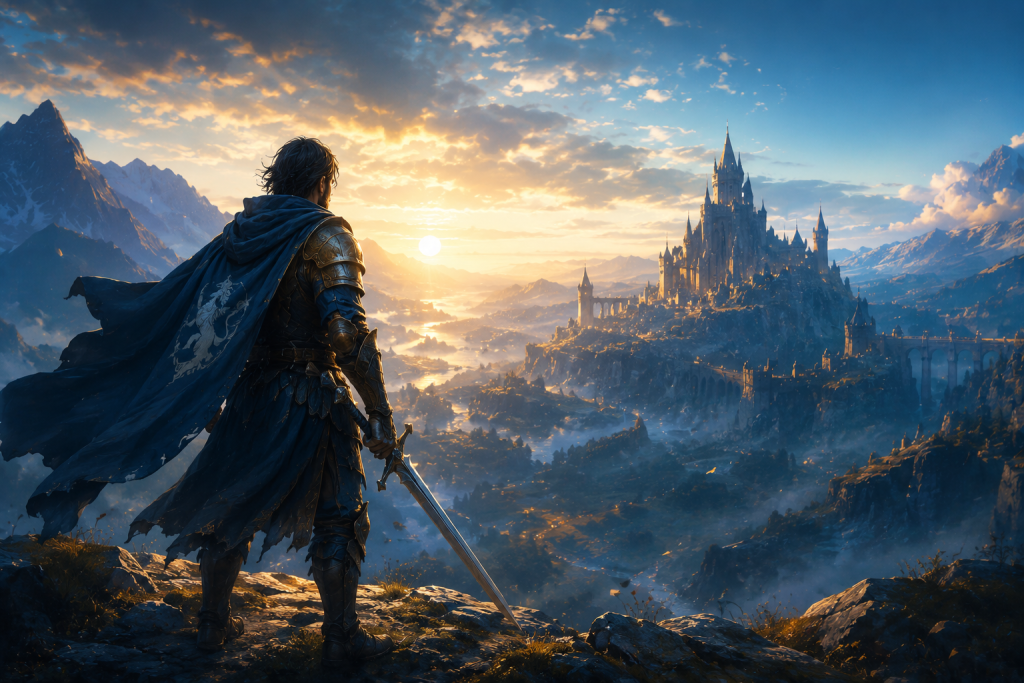
The meta has shifted. So, RPG players in 2025 are not loading into a new game with low expectations and a forgiving attitude anymore.
However, now they show up with a fully upgraded critical eye, a long history of reference titles, and absolutely zero patience for animations that feel clunky, lifeless, or like they shipped two patches before they were ready.
No cap, animation quality is now one of the first things players check when they boot a new RPG. It shapes every first impression, every combat encounter, every story beat that lands or flops.
Studios that treat animation as a late-stage checkbox are setting themselves up for a mid-launch and a brutal review score. The ones treating it as a core production priority are building games that hit different.
Why Animation Matters in Modern RPG Games
Animation is the invisible stat that runs underneath everything else in an RPG. It is not the mechanic players read about in a features list, but it is the thing they feel in every single moment of play. A character with fluid, expressive movement carries the main character’s energy naturally. An NPC with robotic, looping gestures breaks immersion instantly.
The gaming audience in the USA is enormous and increasingly discerning. According to the Entertainment Software Association, over 227 million Americans play video games, with RPGs consistently ranking among the top-selling genres.
In a market this size, first impressions carry serious weight, and animation is doing most of the work on those impressions before a player reads a single tooltip.
Why Animation Is the Hidden Final Boss of RPG Production
- Character movement communicates personality, backstory, and emotional range without a single word of dialogue
- Combat animations telegraph attack timing and build the satisfying feedback loop that keeps players grinding
- Ambient world animations like crowd behavior, weather, and environmental movement make open worlds feel populated rather than hollow
- Facial animation during cutscenes determines whether story moments actually land or just play out
- UI and transition animations affect how fluid the overall experience feels between every interaction
Players feel all of this even when they cannot consciously name what they are responding to. Quality animation is the difference between an RPG that holds the player for two hundred hours and one that gets uninstalled after a weekend.
2D vs 3D Animation in RPG Games
Choosing between 2D and 3D animation is not a simple upgrade decision. It is a foundational creative and technical call that shapes the entire production pipeline, the visual identity of the game, and the expectations players bring to every session.
Both approaches have serious W potential when executed with intention. The studios shipping the most celebrated RPGs right now are not defaulting to one or the other. They are making deliberate, informed choices based on art direction, team capacity, and the specific experience they are building toward.
Breaking Down Both Pipelines
2D Animation. 2D brings a handcrafted quality that a significant portion of the RPG community is genuinely ride-or-die about. The aesthetic expressiveness, the frame-by-frame detail, and the stylized personality of a great 2D production can generate hype that photo-realistic games never achieve. Hollow Knight and Hades did not just compete with 3D titles. They outperformed most of them on community loyalty and cultural impact.
3D Animation. 3D unlocks the full technical toolkit that action RPGs and open-world games are built on. Dynamic camera systems, real-time lighting, physics-driven movement, and traversable three-dimensional environments are all native to the 3D pipeline. For any RPG with exploration, environmental storytelling, and combat depth at the center of its design, 3D animation is the natural operating system.
Hybrid Production. Many modern RPGs are running both in parallel. 2D illustrated portraits, UI elements, and animated cutscene sequences layered over fully 3D game environments. This hybrid approach is not a workaround. It is a legitimate creative strategy that balances visual charm with technical capability at every budget level.
A Game Animation Company USA that is fluent in both pipelines gives studios the flexibility to make these decisions based on creative vision rather than studio limitations.
How High-Quality Animation Improves Gameplay
Here is the thing most players will never consciously articulate but every veteran developer knows. Animation quality and gameplay feel are the same stat. They are not two separate things that can be evaluated independently. When animation is responsive, readable, and physically convincing, the gameplay feels fair and tight. When it is not, the game feels broken even if the underlying code is technically perfect.
Hit detection, ability telegraphing, movement responsiveness, and environmental interaction feedback are all communicated through animation systems. A boss fight feels epic or embarrassing based almost entirely on how its animations read in real time under player pressure.
The Direct Gameplay Impact of Animation Quality
- Attack and ability animations telegraph moves to players, which makes combat readable and fair rather than frustrating
- Movement animations define how players perceive character speed, weight, and responsiveness in every environment
- Hit reactions and defeat animations confirm damage and build the satisfying feedback loop that makes combat addictive
- Environmental animations like destructible props, reactive foliage, and interactive NPC behavior deepen the systemic gameplay feel
- Menu, inventory, and map transitions affect cognitive flow and keep players oriented without friction during complex game sessions
Studios that lock in quality animation early with top 3d animation studios build these systems as part of the design rather than retrofitting them after QA starts flagging issues. That timing difference has a massive impact on both the final product and the production cost.
Future of RPG Game Animation in the USA
The future of RPG animation is not a loading screen away. It is already spawning in real time, and the studios paying attention to where the technology is heading are the ones that will be running the meta in the next game generation cycle.
Real-time engines like Unreal Engine 5 have made cinematic-quality lighting and geometric detail accessible to studios of every size. Lumen and Nanite are not features reserved for triple-A budgets anymore. Independent studios are shipping environments that would have required blockbuster-level resources five years ago.
The Trends Defining Next-Gen RPG Animation
- AI-assisted rigging and motion tools are compressing character animation timelines significantly
- Procedural animation systems are making NPC behavior dynamic, contextual, and far less obviously scripted
- Markerless motion capture is dropping the cost floor for high-quality performance data across all studio sizes
- Cloud rendering is removing hardware barriers that previously locked small studios out of high-fidelity production
- Cross-platform delivery now requires animations optimized simultaneously for PC, console, and mobile without quality sacrifice
The 3D game animation company USA landscape is actively leveling up around these technologies. Studios that build fluency in them now are grinding XP that will translate into a serious competitive edge as the next generation of RPG releases hits the market.
Benefits of Realistic Animation in RPG Games
Realistic, high-quality animation delivers benefits that show up in the numbers that actually matter to a studio’s long-term health. Review scores, player retention, streaming performance, and DLC sales are all influenced directly by animation quality in ways that are measurable and consistent across the industry.
Players who feel fully immersed in an RPG world stay longer, spend more, and talk louder about the game in the communities where discovery happens. In a market where organic word-of-mouth and streaming visibility drive more wishlists than most paid advertising, that immersion is a serious business asset.
The Real-World Returns on Animation Investment
- Higher metacritic and user review scores driven by perceived production polish and attention to detail
- Stronger player retention as deep immersion reduces natural drop-off at difficult narrative or mechanical gates
- Better streaming and content creator performance because visually compelling games generate more watchable content
- Increased DLC and expansion sales among players who feel genuinely invested in the world and its characters
- Stronger awards and press recognition based on technical and artistic achievement in animation production
Get Professional Game Animation Services
Split Arts delivers specialist animation services built around the specific demands of RPG game development. Our team works across 2D and 3D pipelines with deep experience in character animation, environment work, UI motion design, and cinematic cutscene production.
Every game has its own visual identity, its own tone, and its own technical constraints. Split Arts does not apply generic templates to unique projects. We build animation solutions from the ground up that are designed around what each game actually needs to succeed.
Whether you are in pre-production, laying the stylistic foundation, deep in development, building out combat systems, or approaching launch and needing a final quality push, Split Arts has the capacity and expertise to support your project at every stage.
Contact Split Arts today to discuss your game and receive a production proposal matched to your timeline, scope, and creative ambitions.
Frequently Asked Questions
- Why does animation quality matter so much in RPG games?
Animation quality is crucial in RPGs as it significantly influences players’ perception of production value, immersion, and gameplay. In a genre focused on emotional investment, poor animation can quickly disrupt immersion.
- What is the real difference between 2D and 3D animation in RPG games?
The difference between 2D and 3D animation lies in aesthetics and functionality. 2D offers stylized, handcrafted visuals, while 3D provides dynamic environments and physics, which are essential for open-world experiences. Many studios incorporate both to leverage the strengths of each style.
- How does animation affect gameplay in RPGs beyond just visuals?
Animation also plays a key role in gameplay beyond visuals. It conveys important information like attack cues, feedback, and movement clarity, making the experience feel more intuitive.
- How long does professional game animation production typically take?
Regarding production time, character animation can take four to eight weeks, while full RPG animation for larger casts often spans several months, influenced by team size and pipeline clarity.
- Why does investing in animation early in development matter so much?
Investing in animation early is vital as it integrates seamlessly into game design, reducing post-launch issues and QA costs. Proper early integration fosters better reviews and player satisfaction.
Final Thoughts
Animation is not a cosmetic layer on top of an RPG. It is the core system that makes everything else feel real, fair, and worth a hundred hours of the player’s time. Studios that recognize this early build games that become part of the culture. Studios that treat it as a final production checkbox ship games that fade out before the season ends.
Split Arts is built for developers who take animation seriously from day one. Our team brings the technical depth, creative range, and production discipline that RPG animation demands at every level of studio scale.
Reach out to Split Arts today and start building the animation system your game actually deserves to ship with.